testing
Computer Science and Engineering
Introduction
The Bachelor of Engineering in Computer Science and Engineering (BE CSE) program at the Department of Computer Science and Engineering was established in 2006. It ranks among the most sought-after courses at Gnanamani College of Technology. This program is accredited by AICTE, NBA and boasts a team of highly qualified faculty and technical personnel.
The program is dedicated to advancing education and research in the Computer Science and Engineering field through partnerships with industries. Research is actively conducted in areas including Distributed Computing, Service-Oriented Architecture, Networking, Computer Technologies, Programming Languages, Database Management, Software Engineering, Operating Systems, Image Processing, Information Retrieval, Storage Management, Data Warehousing and Mining, Big Data Analytics, Cloud Computing, and Computational Intelligence.
Students and faculty are also given excellent opportunities to join various professional organizations such as IEEE and CSI. The program is supported by well-equipped laboratories and a comprehensive library filled with the latest and highest quality books, journals, and magazines.
Additionally, the program encourages students to engage in research, which makes them highly desirable to leading IT firms in India. It has developed into a competitive program focused on students, designed to significantly enhance the learning experience through lab sessions, assignments, training, seminars, projects, and independent studies. One of the program’s greatest strengths is the strong sense of loyalty that our alumni feel toward it.
Profile
Computer Science and Engineering
Our department of Computer Science and Engineering has a number of the distinguished faculty panel who has an affluent blend of both industry and academic experience. They constantly disseminate and impart applied knowledge to the young minds through our mentor-mentee system.
The Department has been permanently affiliated with Anna University and accredited by NBA (National Board of Accreditation).
2006
Established
Computer Science and Engineering
Undergraduate
Development activities
The graduates from this department have become professional engineers, and are employed in software companies. They have become successful Software developers and Managers in the leading software top companies such as:

FDP
STTP
Conferences
Seminars
Guest lectures and workshop
Our Vision & Mission
Vision
To prepare competent and ethical software professionals to serve the society.
Mission
- MD1: To provide quality education to shape skilled responsible engineers
- MD2: To promote learning, creativity and research culture to solve real-world problems
- MD3: To develop skills, support start-ups and collaborate with industries for societal benefit.
Scope of the Department
- To impart strong foundational knowledge in core areas such as programming, data structures, algorithms, computer architecture, operating systems, databases, software engineering, and computer networks.
- To provide exposure to emerging technologies including artificial intelligence, machine learning, data science, cloud computing, cybersecurity, Internet of Things, and blockchain.
- To implement outcome-based education (OBE) practices in line with NBA, NAAC, and AICTE guidelines.
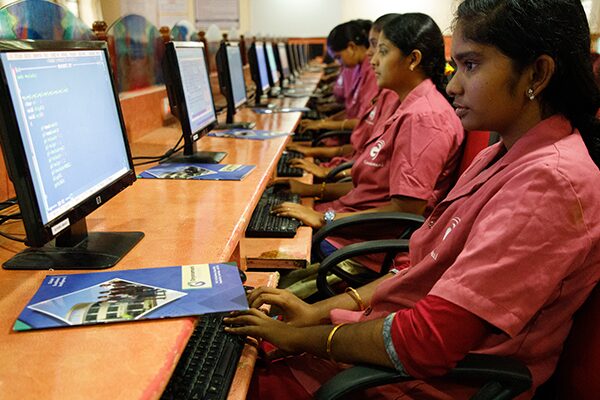
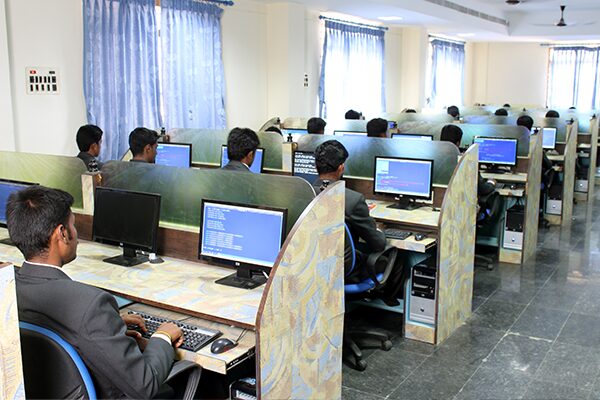
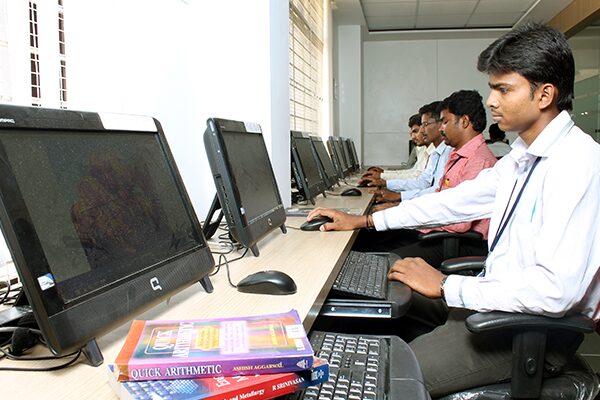
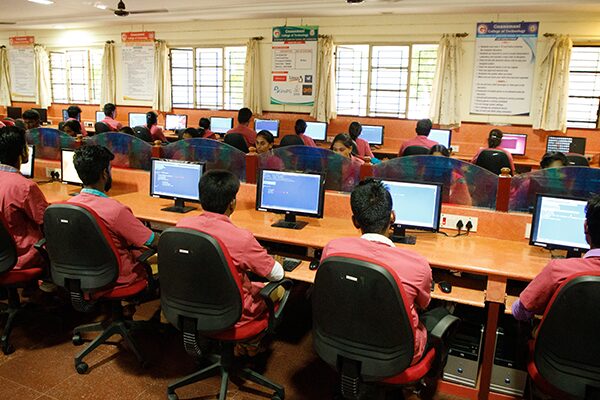
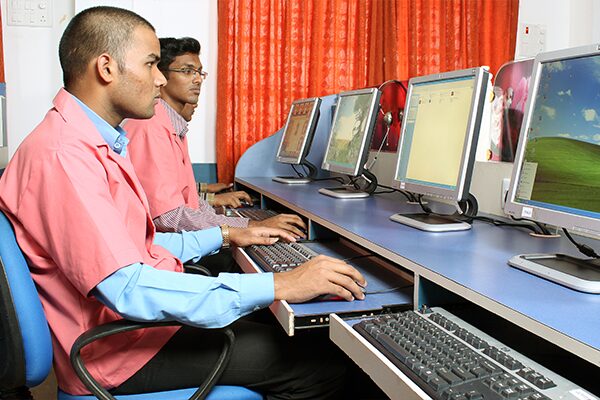
- To promote practical learning through laboratories, projects, internships, and industry-oriented training.
- To encourage research, innovation, and development activities addressing real-world and societal challenges.
- To strengthen industry–academia collaboration through guest lectures, workshops, MoUs, and collaborative projects.
- To foster ethical values, professional skills, teamwork, and effective communication among students.
- To support entrepreneurship, start-ups, and lifelong learning for continuous professional development.
- To prepare graduates for higher education, research, and diverse career opportunities in the computing domain.
Lab Facility
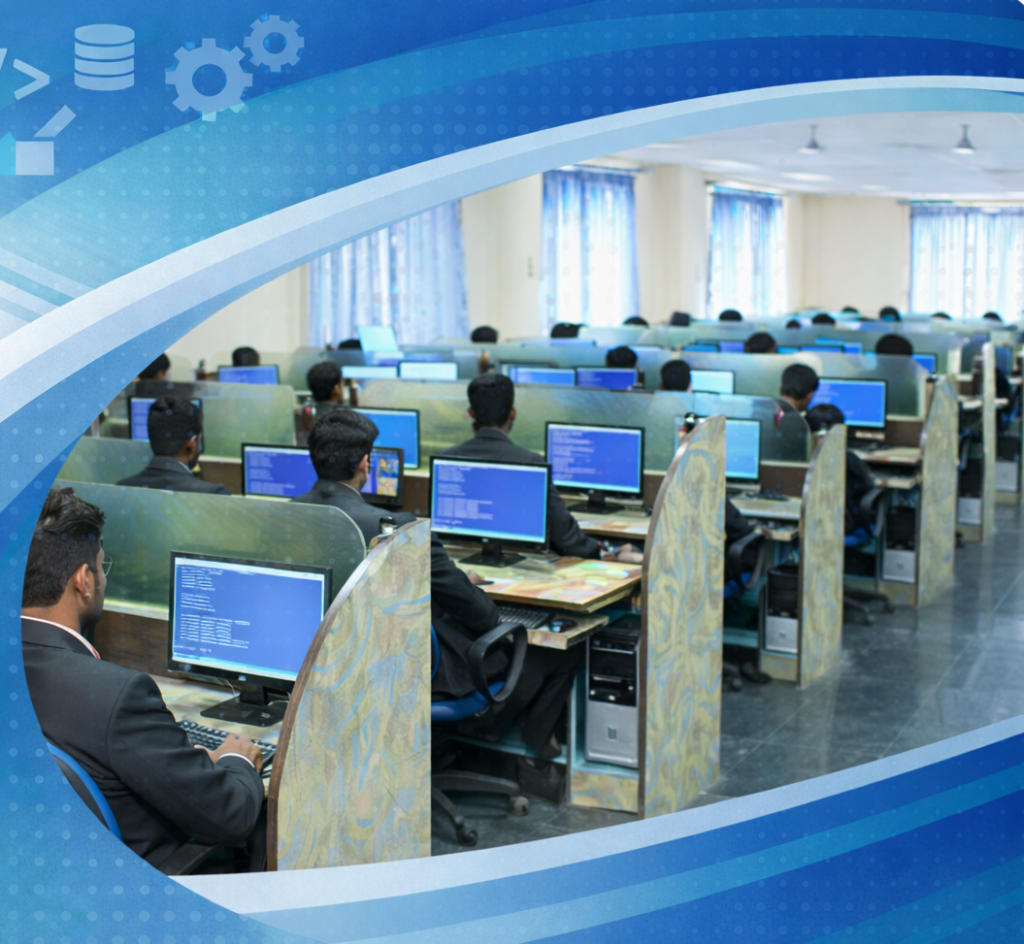
Basic Computing Laboratory
C Programming Laboratory
Problem Solving and Python Programming
Data Structures Laboratory
Database Management Systems Laboratory
Object Oriented Programming Laboratory
Data Science Laboratory
Operating Systems Laboratory
Computer Networks Laboratory
Security Laboratory
Mobile Application Development Laboratory
Embedded Systems and IoT Laboratory
Program Outcomes & Objectives
- PEO-1: Be capable of design by applying the concepts of science, mathematics, engineering fundamentals and computing for the rapid change of society requirements.
- PEO-2: Demonstrate ethical values, effective communication and team skills in their profession and adapt to current trends through lifelong learning.
- PEO-3: Be expert in profession, higher education, research and entrepreneurship.
- Engineering knowledge: Apply the knowledge of mathematics, science, engineering fundamentals and an engineering specialization to the solution of complex engineering problems.
- Problem analysis: Identify, formulate, review research literature, and analyze complex engineering problems reaching substantiated conclusions using first principles of mathematics, natural sciences, and engineering sciences.
- Design/development of solutions: Design solutions for complex engineering problems and design system components or processes that meet the specified needs with appropriate consideration for the public health and safety, and the cultural, societal, and environmental considerations.
- Conduct investigations of complex problems: Use research-based knowledge and research methods including design of experiments, analysis and interpretation of data, and synthesis of the information to provide valid conclusions.
- Modern tool usage: Create, select, and apply appropriate techniques, resources, and modern engineering and IT tools including prediction and modeling to complex engineering activities with an understanding of the limitations.
- The engineer and society: Apply reasoning informed by the contextual knowledge to assess societal, health, safety, legal and cultural issues and the consequent responsibilities relevant to the professional engineering practice.
- Environment and sustainability: Understand the impact of the professional engineering solutions in societal and environmental contexts, and demonstrate the knowledge of, and need for sustainable development.
- Ethics: Apply ethical principles and commit to professional ethics and responsibilities and norms of the engineering practice.
- Individual and team work: Function effectively as an individual, and as a member or leader in diverse teams, and in multidisciplinary settings.
- Communication: Communicate effectively on complex engineering activities with the engineering community and with society at large, such as, being able to comprehend and write effective reports and design documentation, make effective presentations, and give and receive clear instructions.
- Project management and finance: Demonstrate knowledge and understanding of the engineering and management principles and apply these to one’s own work, as a member and leader in a team, to manage projects and in multidisciplinary environments.
- Life-long learning: Recognize the need for, and have the preparation and ability to engage in independent and life-long learning in the broadest context of technological change.
- 1: Understand, analyze and develop computer applications in data Mining/ Analytics, Cloud Computing, Networking, Security, etc. to meet the requirements of industry and society.
- 2: Enrich the ability to design and develop software and qualify for Employment, Higher studies and Research.
As a Centre of Excellence in Information Technology, we bridge the gap between academia and industry. Through close collaboration with our industry partners, we provide students with opportunities to work on real-world projects and gain invaluable experience. Our commitment to sustainable energy solutions drives our research and education, contributing to a greener future.

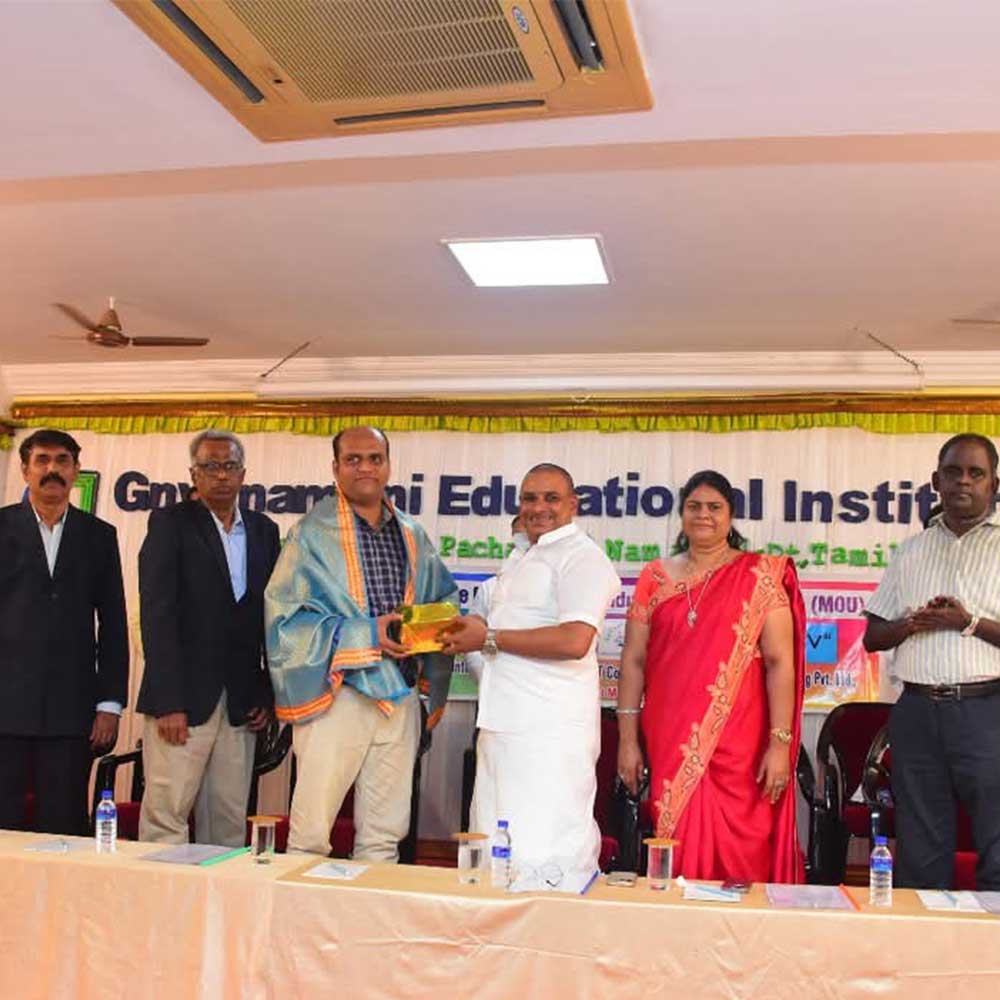
Gnanamani College of Technology (Autonomous), Namakkal, proudly collaborates with leading industry partners to enhance innovation, research, and skill development. This MoU aims to bridge the gap between academia and industry, providing students with hands-on experience, expert mentorship, and cutting-edge technological insights.