



Pharmaceutical Technology
Introduction
The Department of Pharmaceutical Technology is a multidisciplinary field that applies principles of engineering, chemistry, biology, and material science to the design, development, manufacturing, and quality control of pharmaceutical products. It plays a vital role in transforming active pharmaceutical ingredients into safe, effective, and high-quality dosage forms such as tablets, capsules, injectables, and novel drug delivery systems.
In an engineering education context, Pharmaceutical Technology equips students with a strong foundation in unit operations, process engineering, formulation science, bioprocessing, and regulatory standards such as Good Manufacturing Practices (GMP). The discipline emphasizes the integration of modern manufacturing technologies, automation, and quality assurance to meet the evolving demands of the global pharmaceutical and healthcare industries.

Profile
Pharmaceutical Technology
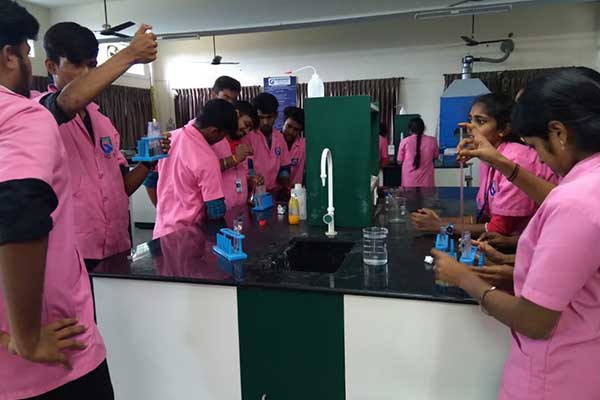
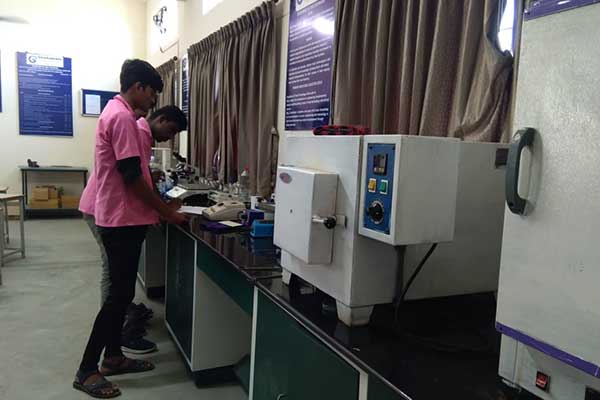
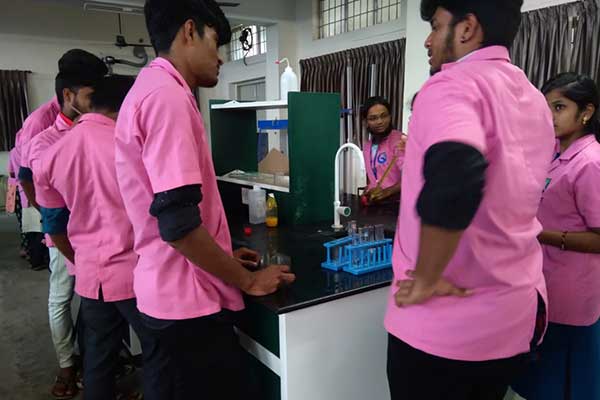
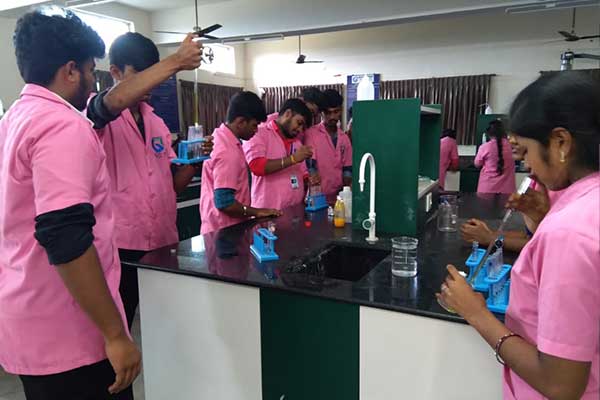
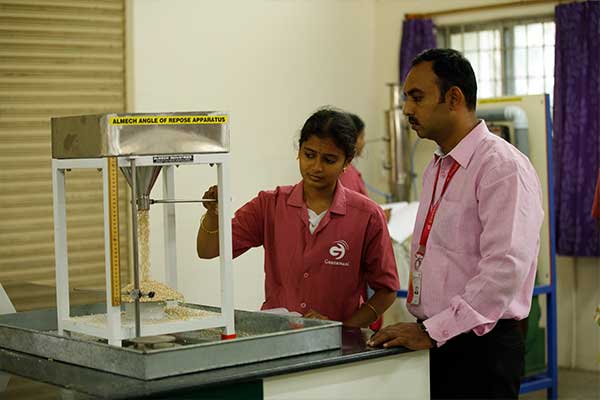
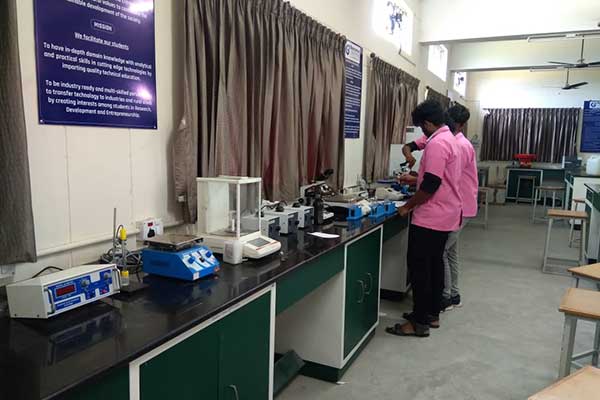
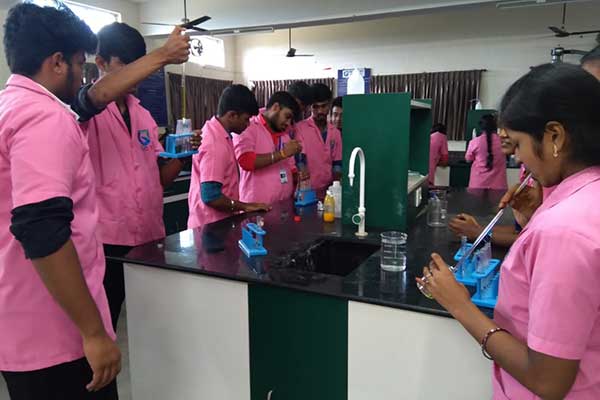
The Department of Pharmaceutical Technology established in the academic year 2020–2021 at Gnanamani College of Technology, provides a strong academic and research-driven environment that promotes innovation and interdisciplinary learning. Guided by well-defined core values, the department is committed to achieving its mission and vision by applying engineering principles to biological and medical challenges. The department is equipped with modern laboratories featuring advanced Pharmaceutical Technology and medical imaging instruments, along with uninterrupted power supply facilities, to support effective teaching, research, and development activities.
2020
Established
B.Tech – Pharmaceutical Technology
4 Years
Undergraduate (UG)
Scope of the Department
- The Pharmaceutical Department offers wide-ranging opportunities in education, research, industry, and healthcare by integrating engineering principles with pharmaceutical sciences. The scope of the department extends across drug development, manufacturing, quality assurance, and regulatory compliance, addressing the growing demands of the global pharmaceutical and healthcare sectors.
- Prepares graduates for careers in pharmaceutical manufacturing, formulation, and process engineering Develops skills relevant to quality control, quality assurance, and validation Exposure to regulatory frameworks such as GMP, GLP, and international guidelines Opportunities in pharmaceutical, biotechnology, and medical device industries.
Our Vision & Mission
Vision
To be the Centre of excellence in Pharmaceutical technology education, training, research and development.
Mission
- To enlighten the students about the latest technologies in pharmaceuticals through innovative educational practice with multi-disciplinary approach.
- To enhance research and development in the area of Pharmaceutical technology and healthcare.
- To Inculcate strong ethical values and professionalism to serve society.
Program Outcomes & Objectives
- PEO-1: Expand the knowledge base by pursuing higher studies in various fields of pharmaceutical sciences and management.
- PEO-2: Contribute to the healthcare industry through research, development, and other healthcare services.
- PEO-3: Generate job opportunities through the creation of start-ups and serve the society’s needs for healthcare with professional ethics and commitments.
- PO 1 Engineering Knowledge:
Apply the knowledge of mathematics, science, engineering fundamentals, and an engineering specialization to the solution of complex engineering problems. - PO 2 Problem Analysis:
Identify, formulate, review research literature, and analyse complex engineering problems reaching substantiated conclusions using first principles of mathematics, natural sciences, and engineering sciences. - PO 3 Design/Development of Solutions:
Design solutions for complex engineering problems and design system components or processes that meet the specified needs with appropriate consideration for the public health and safety, and the cultural, societal, and environmental considerations. - PO 4 Conduct Investigations of Complex Problems:
Use research-based knowledge and research methods including design of experiments, analysis and interpretation of data, and synthesis of the information to provide valid conclusions. - PO 5 Modern Tool Usage:
Create, select, and apply appropriate techniques, resources, and modern engineering and IT tools including prediction and modelling to complex engineering activities with an understanding of the limitations. - PO 6 The Engineer and Society:
Apply reasoning informed by the contextual knowledge to assess societal, health, safety, legal and cultural issues and the consequent responsibilities relevant to the professional engineering practice. - PO 7 Environment and Sustainability:
Understand the impact of the professional engineering solutions in societal and environmental contexts, and demonstrate the knowledge of, and need for sustainable development. - PO 8 Ethics:
Apply ethical principles and commit to professional ethics and responsibilities and norms of the engineering practice. - PO 9 Individual and Team Work:
Function effectively as an individual, and as a member or leader in diverse teams, and in multidisciplinary settings. PO 10 Communication:
Communicate effectively on complex engineering activities with the engineering community and with society at large, such as, being able to comprehend and write effective reports and design documentation, make effective presentations, and give and receive clear instructions.PO 11 Project Management and Finance:
Demonstrate knowledge and understanding of the engineering and management principles and apply these to one’s own work, as a member and leader in a team, to manage projects and in multidisciplinary environments.- PO 12 Life-Long Learning:
Recognize the need for, and have the preparation and ability to engage in independent and life-long learning in the broadest context of technological change.
PSO 1: Apply fundamental concepts in the areas of clinical testing, drug synthesis, drug formulation and targeted drug delivery.
PSO 2: Adapt to continuously changing Pharmaceutical technologies and play pivotal professional role in sustainable societal development.
Development Activities

Curriculum enrichment through value-added courses and certification programs

Guest lectures by industry professionals and academic experts

Faculty development programs (FDPs), workshops, and seminars

Continuous curriculum review in line with industry and regulatory requirements
Innovation Activities
- Encouragement of student and faculty publications in reputed journals
- Patent filing, technology transfer, and innovation incubation.
Projects and Internships
Students undertake academic projects and gain valuable real-world experience through internships with hospitals and industries.
Competitions and Workshops
Active participation in hackathons, seminars, workshops, and professional body activities.
Start-up’s and Innovation Support
Institutions offer incubation and innovation centres that encourage student and faculty startups, fostering an entrepreneurial culture.
Hands-on Training
The curriculum is designed in collaboration with industry partners, providing extensive hands-on training in medical device design.
Industry Interaction and Collaboration
Memoranda of Understanding (MoUs) with pharmaceutical and biotech industries. Industrial visits to manufacturing units and R&D centers. Industry-sponsored projects and internships. Expert sessions on GMP, regulatory affairs, and industrial practices.
List of Laboratories

Biochemistry and Physiology Lab

Pharmaceutical Analysis Lab

Physical Pharmaceutics Lab

Microbiology Lab

Unit Operation Lab

Pharmacology Lab

Dosage Forms Lab

Biopharmaceutics and Pharmacokinetics Lab
Faculty Information
| S. No. | Name of the Faculty | Qualification | Designation |
|---|---|---|---|
| Loading... | |||
Board of Studies
| S. No. | Category | Members |
|---|---|---|
| 1 |
Chairperson (1Member) Head of the Department concerned |
Dr. V. Baskaran Dean-Chemical Sciences |
| 2 |
All Faculties Faculty members of the Department |
Faculty members of the Departments of Biotechnology, Chemical Engineering, Food Technology and Pharmaceutical Technology |
| 3 | Subject Experts |
Dr.A.Arunagiri Associate Professor, Department of Chemical Engineering, National Institute of Technology, 94438 08533 aagiri@nitt.edu |
|
Dr. N.Samsudeen Associate Professor, Department of Chemical Engineering, National Institute of Technology, Trichy 98941 82441 samsudeen@nitt.edu |
||
| 4 | University Nominee |
Dr. P. Selvamani Professor, Department of Pharmaceutical Technology, Bharathidasan Institute of Technology Campus, Anna University, Tiruchirapalli - 620024 98424 78785 selvamani@aubit.edu.in profselvamani@gmail.com |
| 5 | Representative from industry/corporate sector/allied areas | Mr. R Shurya Chief Manager Sree Amogha Food Gallery Pvt Limited Namakkal-637407 79041 83832 rshurya@gmail.com |
| 6 | Expert | Dr. C. Sivakumar Managing Director Ensafe Technologies (P) Ltd., Salem-636004. 94434 28302 infoensafetech@gmail.com |
| Dr. S. Renganathan Professor Department of Biotechnology, Anna University, Chennai-600025 99416 13532 srenganathan@annauniv.edu |
| S. No. | Institution | Month & Year | Duration |
|---|---|---|---|
| Loading... | |||
| S. No. | Project Team | Register No | Student Name | Project Title | Mentor Name |
|---|---|---|---|---|---|
| Loading... | |||||
| S. No. | Name of the Student | Company Name | Start Date | End Date |
|---|---|---|---|---|
| Loading... | ||||
| S. No. | Date | Coordinator | Event | Guest Name | Company |
|---|---|---|---|---|---|
| Loading... | |||||