Master of Engineering in Environmental Engineering
Introduction
The Master of Engineering (ME) in Environmental Engineering is a specialized, interdisciplinary program designed to train professionals to solve complex environmental problems. It covers water treatment, air quality management, waste management and sustainability, often linking to civil and chemical engineering. The program emphasizes engineering solutions for pollution control, Industrial waste management and climate change mitigation, fostering skills for careers in environmental consulting, water management, and research.
Master of Engineering in Environmental Engineering
Postgraduate
Scope of the Department
M. Tech in Environmental Engineering offers a high-demand career path focused on sustainability, pollution control, and waste management, driven by strict environmental regulations. Graduates find employment in consulting, government agencies, R&D, and manufacturing, with roles including environmental consultants, engineers, and scientists.
Our Vision & Mission
Vision
To be the technical department of high standard and quality comparable to Global Excellence and Intelligence and mould as responsible Environmental engineers, researchers, entrepreneurs and as professional of wisdom with ethical and moral values to the society
Mission
- MD1: To produce smart Environmental engineers with basic knowledge on science and engineering to compete the global challenges
- MD2: To Inculcate moral and ethical values among the students.
- MD3: To encourage students to pursue higher education and take competitive exams and various career enhancing courses.
- MD4: To promote quality education, research and consultancy for industrial and society needs
Program Outcomes & Objectives
PO 1: Research Aptitude – An ability to independently carry out research/investigation and development work to solve practical problems
PO 2: Technical documentation – An ability to write and present a substantial technical report/document
PO 3: Technical competence – Students should be able to demonstrate a degree of mastery over the area as per the specialization of the program. The mastery should be at a level higher than the requirements in the appropriate bachelor program
Engineering Graduates will be able to
PEO 1: Gain knowledge and skills in environmental engineering which will enable them to have a career and professional accomplishment in the public or private sector organizations.
PEO2: Become consultants on complex real life Environmental Engineering problems related to water supply, sewerage, sewage treatment, solid waste management, air pollution control, environmental impact assessment, industrial pollution control.
PEO3: Become entrepreneurs and develop processes and technologies to meet desired environmental protection needs of society and formulate solutions that are technically sound, economically feasible, and socially acceptable.
PEO4: Perform investigation for solving environmental problems by conducting research using modern equipment and software tools
PEO5: Function in multi-disciplinary teams and advocate policies, systems, processes and equipment for control and remediation of pollution.
Students will be able to
PSO 1: Handle complex problems – Use research based knowledge, methods, appropriate techniques, resources and tools to solve complex engineering issues with an understanding of the Limitations.
PSO 2: Environmental Sustainability and societal Ethics – Ensure development of socially relevant and eco-friendly indigenous products by applying technical knowledge, ethical principles and sound engineering practices.
Core Focus Areas
The curriculum typically includes advanced studies in environmental biotechnology, hazardous waste management, environmental modeling, water treatment, and air pollution control.
Interdisciplinary Nature
It combines concepts from civil engineering, chemical engineering, biology, chemistry, and ecology to create sustainable, innovative solutions.
Technical Skill Development
Students acquire expertise in designing water supply and wastewater treatment systems, air pollution control technologies, and managing waste.
Sustainability and Policy
The program focuses on reducing the ecological footprint and meeting environmental regulations.
Research & Application
It often involves research on environmental impacts and the design of treatment units, with a goal to enhance environmental quality and human health.
Industry Demand
Graduates are prepared for roles in environmental consulting firms, government agencies, construction, and water/wastewater utilities, often with a salary premium over a bachelor's degree.
Core Courses
Environmental Chemistry, Applied Mathematics, Water Resources Management.
Electives
Sustainable Energy, Air Quality Engineering, Solid Waste Technology.
Practical Work
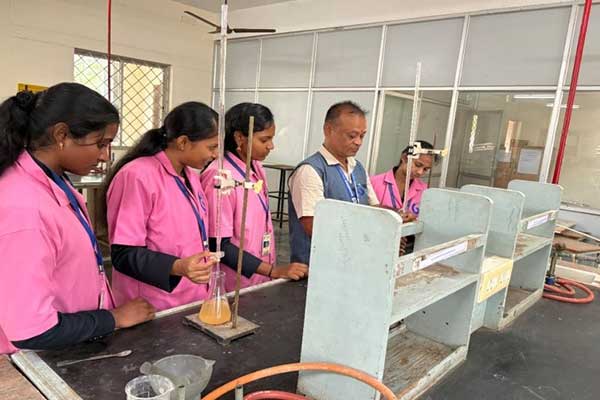
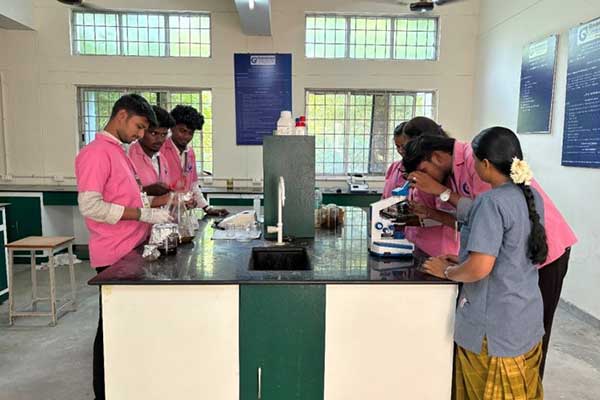
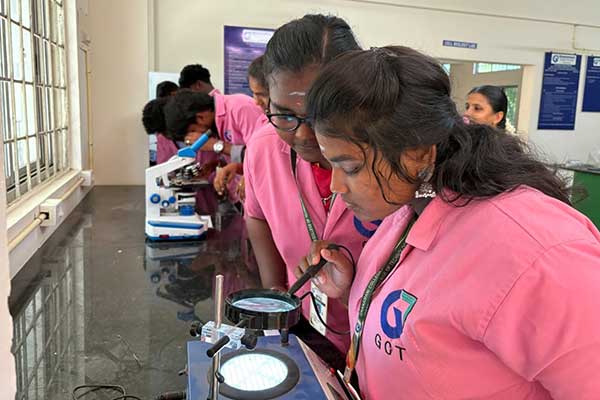
Laboratory work for pollutant analysis and research projects.
Project Management
Training in Environmental Impact Assessment
Water & Waste water Management
Designing treatment plants and modeling water networks (e.g., EPANET).
Solid Waste Management
Managing waste disposal, recycling, and composting.
Air Pollution Control
Developing technologies for emission reduction.
Sustainability & ESG
Serving as environmental, social, and governance (ESG) specialists.
Environmental Impact Assessment (EIA)
Conducting legal compliance studies for projects.
Private Sectors
Consulting firms, waste management firms, and manufacturing industries.
Public Sector
Central and State Pollution Control Boards (CPCB/SPCB), environmental departments, water boards, and organizations like BARC, ONGC, and IOCL.
Academics & Research
Research Associates/Analysts, faculty in technical institutes, or pursuing Ph.D. for advanced research.
Lab Facility
Environmental Chemistry Laboratory
Environmental Microbiology Laboratory
Environmental and Process Laboratory
| S. No. | Name of the Faculty | Qualification | Designation |
|---|---|---|---|
| Loading... | |||
| S. No. | Project Team | Register No | Student Name | Project Title | Mentor Name |
|---|---|---|---|---|---|
| Loading... | |||||