



Master of Engineering in Biomedical Engineering
Introduction
The Department of Biomedical Engineering is a unique and multidisciplinary program committed to producing graduates who apply scientific knowledge and engineering principles to develop advanced biomedical technologies that strengthen the national healthcare system. Biomedical engineers collaborate with doctors, therapists, and researchers to design and develop medical systems, equipment, and devices that address real-world clinical challenges. Their innovations have contributed to numerous life-saving and life-enhancing solutions.
Master of Engineering in Biomedical Engineering
Postgraduate
Scope of the Department
- Interdisciplinary Education: Combines computer science, mathematics, statistics, and domain knowledge to solve real-world problems using data and intelligent systems.
- Core Skill Development: Focus on programming, machine learning, deep learning, data analytics, data visualization, and AI algorithms.
- Industry Applications: Prepares students for roles in healthcare, finance, manufacturing, agriculture, smart cities, cybersecurity, e-commerce, and more.
- Research & Innovation: Encourages research in areas like natural language processing, computer vision, robotics, recommender systems, and ethical AI.
- Hands-on Learning: Emphasis on labs, projects, internships, hackathons, and industry collaborations.
- Career Opportunities: Opens paths to careers such as Data Scientist, AI Engineer, Machine Learning Engineer, Data Analyst, Research Scientist, and AI Consultant.
- Entrepreneurship & Startups: Supports innovation, product development, and startup creation using AI-driven solutions.
- Future Readiness: Equips graduates to adapt to emerging technologies and pursue higher studies or certifications in advanced AI fields.
Our Vision & Mission
Vision
To be the centre for excellence in Biomedical Engineering by imparting quality education and promoting research and industrial innovation for human health.
Mission
- To impact strong theoretical as well as practical knowledge of our graduates in the field of Biomedical Engineering so that they will be able to apply multidisciplinary knowledge and skills to solve complex problems of health care industry.
- To analyze complex problems to fulfill the professional and societal need globally.
- To interact with leading scientists, technocrats and entrepreneurs to gain broader perspective of industry, research and continuing higher education.
Program Outcomes & Objectives
Engineering Graduates will be able to:
1. Engineering knowledge: Apply the knowledge of mathematics, science, engineering fundamentals and an engineering specialization to the solution of complex engineering problems.
2. Problem analysis: Identify, formulate, review research literature, and analyze complex engineering problems reaching substantiated conclusions using first principles of mathematics, natural sciences, and engineering sciences.
3. Design/development of solutions: Design solutions for complex engineering problems and design system components or processes that meet the specified needs with appropriate consideration for the public health and safety, and the cultural, societal, and environmental considerations.
4. Conduct investigations of complex problems: Use research-based knowledge and research methods including design of experiments, analysis and interpretation of data, and synthesis of the information to provide valid conclusions.
5. Modern Tool Usage: Create, select, and apply appropriate techniques, resources, and modern engineering and IT tools including prediction and modelling to complex engineering activities with an understanding of the limitations.
6. The Engineer and Society: Apply reasoning informed by the contextual knowledge to assess societal, health, safety, legal and cultural issues and the consequent responsibilities relevant to the professional engineering practice.
7. Environment and Sustainability: Understand the impact of the professional engineering solutions in societal and environmental contexts, and demonstrate the knowledge of, and need for sustainable development.
8. Ethics: Apply ethical principles and commit to professional ethics and responsibilities and norms of the engineering practice.
9. Individual and Team Work: Function effectively as an individual, and as a member or leader in diverse teams, and in multidisciplinary settings.
10. Communication: Communicate effectively on complex engineering activities with the engineering community and with society at large, such as, being able to comprehend and write effective reports and design documentation, make effective presentations, and give and receive clear instructions.
11. Project Management and Finance: Demonstrate knowledge and understanding of the engineering and management principles and apply these to one’s own work, as a member and leader in a team, to manage projects and in multidisciplinary environments.
12. Life-Long Learning: Recognize the need for, and have the preparation and ability to engage in independent and life-long learning in the broadest context of technological change.
The Programme Educational Objectives of B.E (Biomedical Engineering) are listed below:
PEO-1: Demonstrate their skills in solving challenges in their chosen filed through the core foundation and knowledge acquired in biomedical engineering.
PEO-2: Exhibit leadership make decisions with societal and ethical responsibilities, function and communicate effectively in multidisciplinary settings.
PEO-3: Recognize the need for sustaining and expanding their technical competence and engage in learning opportunities throughout their careers.
Engineering Graduates will be able to:
PSO1: To design and develop diagnostic and therapeutic device that reduce physician burnout and enhance the quality of life for the end user by applying fundamentals of Biomedical Engineering.
PSO2: To apply software skills in developing algorithms for solving healthcare-related problems, to adapt emerging information and communication technologies and to innovate ideas and solutions to address current societal and scientific issues there by developing Indigenous medical instruments that are on par with the existing technology.
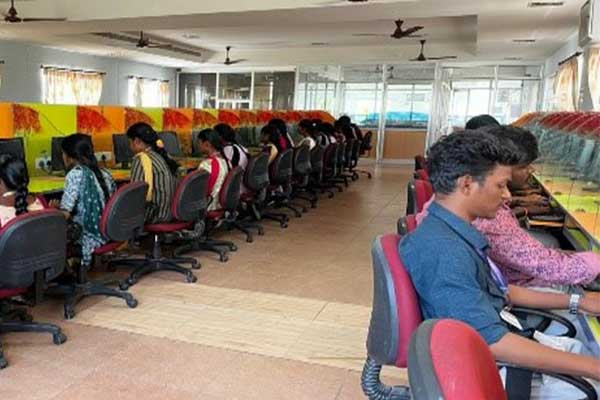
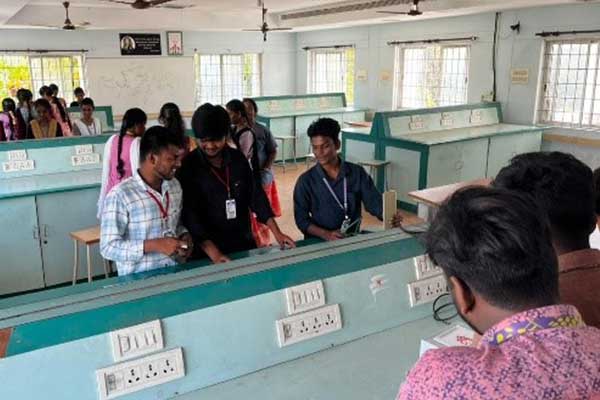
Lab Facility

23PBM121
Clinical Instrumentation laboratory

23PBM122
Biosignal Processing Laboratory

23PBM303
Medical Device Design Laboratory
| S. No. | Name of the Faculty | Qualification | Designation |
|---|---|---|---|
| Loading... | |||
| S. No. | Project Team | Register No | Student Name | Project Title | Mentor Name |
|---|---|---|---|---|---|
| Loading... | |||||
| S. No. | Name of the Student | Company Name | Start Date | End Date |
|---|---|---|---|---|
| Loading... | ||||