




Information Technology
To the software system and identify levels of coupling and cohesion and to Design modules with low coupling and high cohesion for better structure to the software Coupling and cohesion importance.
The students can understand the topic through the resources provided and get more clearly with the discussions and activity done in, coupling and cohesion are fundamental concepts in software engineering that measure the quality of a software system’s design. Coupling refers to the degree of interdependence between software modules, indicating how closely connected they are and how much one module relies on the behavior, data, or interfaces of another. High coupling means that modules are closely interconnected, while low coupling means they are more independent. Cohesion measures the degree to which elements within a module work together to fulfill a single, well-defined purpose. High cohesion means that elements are closely related and focused on a single purpose, while low cohesion means that elements are loosely related and serve multiple purposes. Both concepts are crucial for determining the maintainability, scalability, and reliability of a software system. High coupling and low cohesion can make a system difficult to change and test, while low coupling and high cohesion make a system easier to maintain and improve.

The students can understand the topic through the resources provided and get more clearly with the discussions and activity done in groups. As a part of activity, students are divided into groups of their own with minimum batch size of 6 or more. An exception is an event that occurs during the execution of a program that disrupts the normal flow of instruction. Exception handling is a structured way to manage errors and other unusual conditions that can occur during the execution of a program. Instead of letting a program crash when an unexpected event happens, exception handling allows you to “catch” these events and respond to them gracefully.

To develop Java applications with threads and Files, interactive Java programs using graphics, threads and their role in multitasking and parallel processing and to understand how threads move from one state to another
Peer teaching aims to improve students’ understanding of concepts by encouraging them to explain, discuss, and share ideas with their peers, which promotes active learning and better clarity.

Students can understand the structure of a Turing Machine, Design state transitions for simple languages & to apply algorithmic thinking to computation models to improve collaborative problem-solving skills.
An E-Bridge activity is used at the beginning of the lesson to connect students’ existing knowledge with the new topic. In this activity, a real-life example is used to demonstrate how unorganized data can cause problems, activity is to help students understand the concept of database normalization and the importance of organizing data to reduce redundancy and improve data consistency.

Understand fragmentation in dynamic memory allocation and understand basic dynamic allocation approaches, program memory addresses related to physical memory addresses, memory management in base-limit machines, and swapping. They appreciate the need for memory management in operating systems and understand the limits of fixed memory allocation schemes.
THINK – PAIR – SHARE: The students can understand the topic through the resources provided and get more clearly with the discussions and activity done in groups. As a part of activity, students are divided into groups of their own with minimum batch size of 6 or more. Memory management is the functionality of an operating system which handles or manages primary memory and moves processes back and forth between main memory and disk during execution. Memory management keeps track of each and every memory location, regardless of either it is allocated to some process or it is free. It checks how much memory is to be allocated to processes. It decides which process will get memory at what time. It tracks whenever some memory gets freed or unallocated and correspondingly it updates the status.
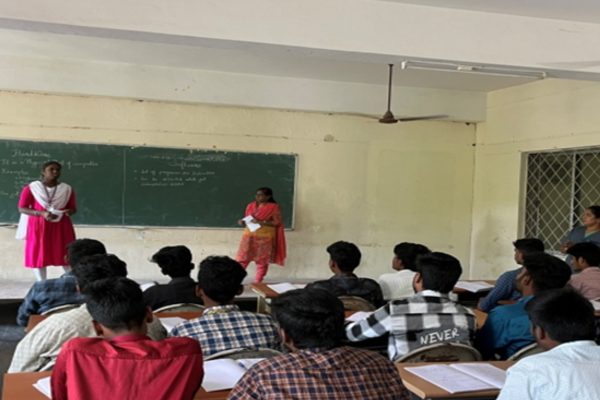
Understand fragmentation in dynamic memory allocation and understand basic dynamic allocation approaches, program memory addresses related to physical memory addresses, memory management in base-limit machines, and swapping. They appreciate the need for memory management in operating systems and understand the limits of fixed memory allocation schemes.