



Electronics and Communication Engineering
NAME OF THE COURSE : MEMS Design
NAME OF THE INNOVATIVE TEACHING METHODOLOGY
EMPLOYED: Simulation And Virtual Lab
NAME OF THE TOPIC : Design and Simulation of Comb Drive
Actuators
NAME OF THE FACULTY : Mrs. P. SASIPRIYA, AP/ECE
Simulation is the process of creating a computer-based model of a real system to study its behavior and performance under different conditions without building the actual system.
A Virtual Lab is an online or computer-based laboratory environment where users can perform experiments and observe results through simulations without using physical equipment. It allows remote learning and safe experimentation.
The implementation of Simulation and Virtual Lab involves the use of software tools and online platforms to create a digital environment where experiments can be designed, executed, and analyzed.
Simulation software such as MATLAB, Simulink, Multisim, or LabVIEW is used to model and simulate real systems.
A computer-based platform is developed where users can access experiments, modify parameters, and observe results in real time.
Different experiments are created as modules with step-by-step procedures, theory, and simulation models.
A graphical interface allows students to interact with the system, input values, run simulations, and view outputs like graphs and waveforms.
The system provides tools to analyze results, compare outputs, and understand system behavior.
Virtual labs are often hosted on web platforms so that students can perform experiments anytime and anywhere using the internet.
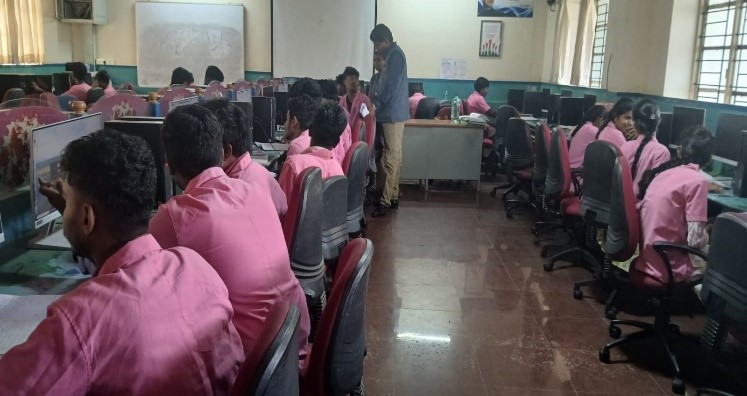
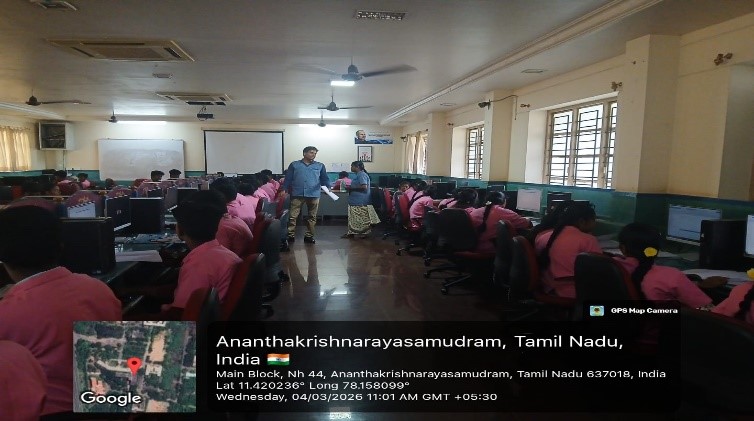
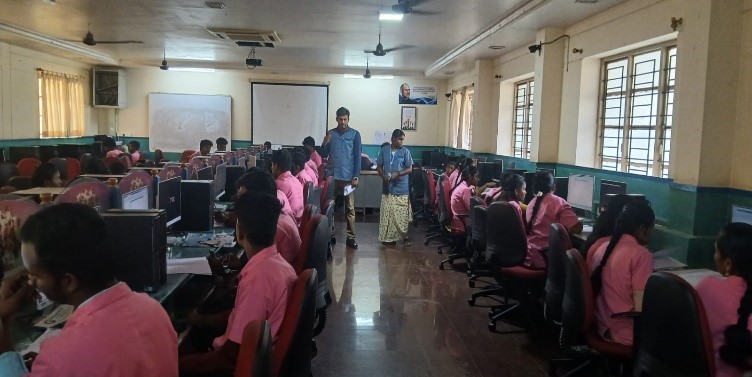
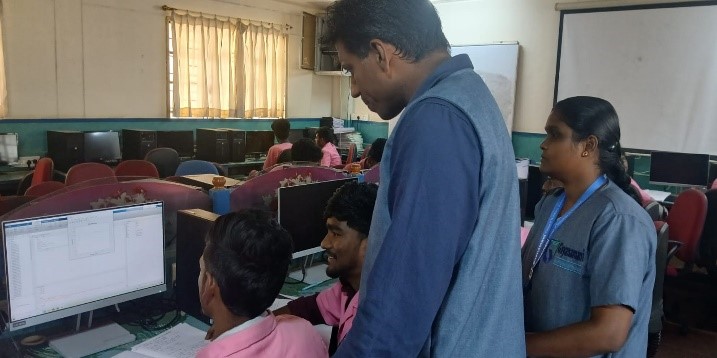
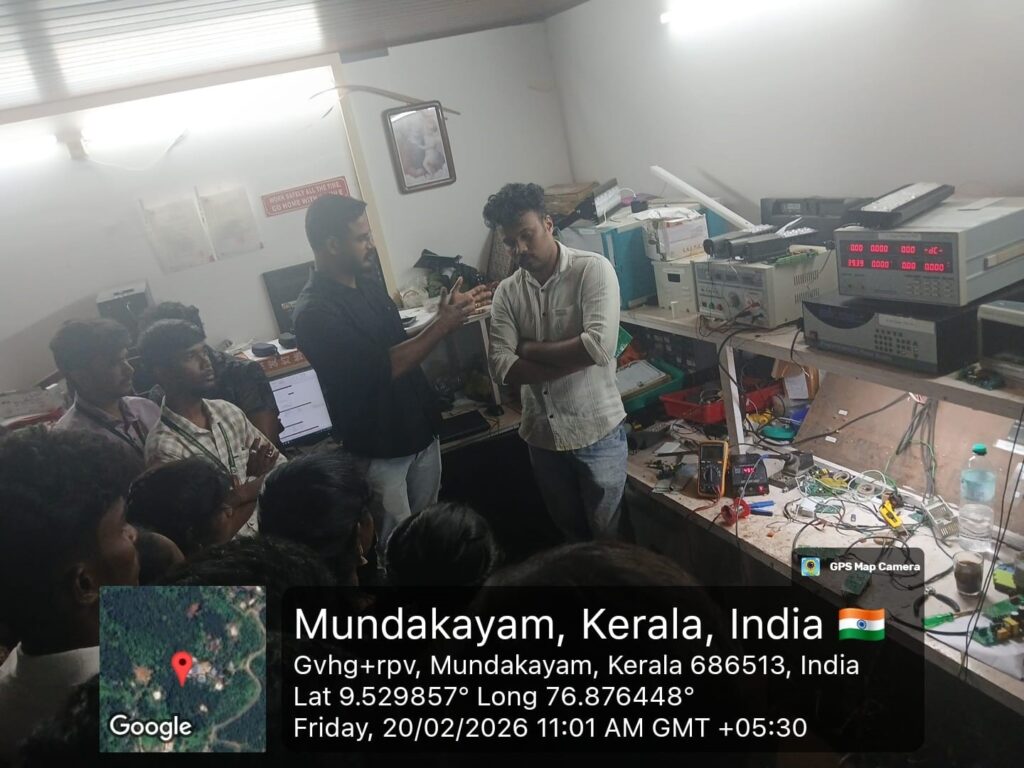
The industry integration initiative was developed to bridge the gap between academic learning and real-world industry practices. The core idea was to collaborate with industry partners to provide practical exposure, hands-on training, and problem-solving opportunities aligned with current market demands
This integration aimed to:
● Enhance students’ technical and professional competencies.
● Align curriculum content with evolving industry standards.
● Provide exposure to real-time business challenges.
● Improve employability and workplace readiness.
The concept was based on experiential learning principles, where theoretical knowledge is reinforced through practical application in collaboration with industry experts.

The implementation was carried out through structured collaboration between the institution and industry partners. Key activities included:
a) Industry Collaboration
Partnerships were established with relevant companies to ensure exposure to current technologies, tools, and workflows. Industry professionals contributed through guest lectures, mentorship, and project guidance.
b) Curriculum Alignment
Course modules were reviewed and updated to reflect industry requirements. Practical components such as live projects, case studies, internships, and workshops were integrated into the academic framework.
c) Skill Development Programs
Students participated in:
● Technical workshops
● Internship programs
● Industry visits
● Real-world problem-solving projects
● Certification programs aligned with industry standards
d) Monitoring and Evaluation
Regular feedback was collected from industry mentors and students to evaluate learning outcomes. Performance was assessed based on project deliverables, skill application, teamwork, and professional conduct.
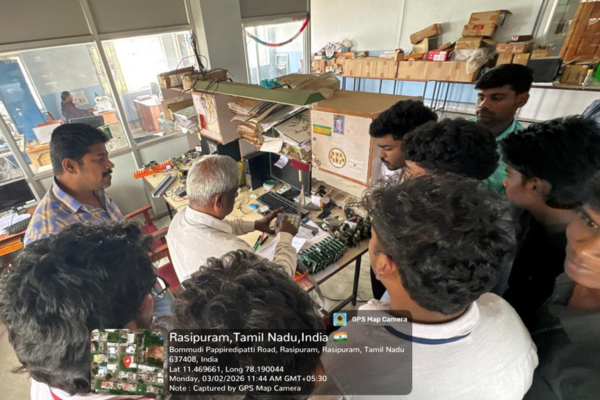
The industry integration initiative resulted in measurable academic and professional benefits:
● Improved technical competency and industry-relevant skills
● Increased student confidence in applying theoretical knowledge to practical scenarios
● Enhanced employability and internship/job placement rates.
● Stronger institutional-industry relationships for future collaborations
● Development of professional skills such as communication, teamwork, and time management
Overall, the integration successfully created a dynamic learning ecosystem that connects academic knowledge with industry expectations, ensuring holistic student development and better career readiness

NAME OF THE COURSE: Digital Signal Processing
NAME OF THE INNOVATIVE TEACHING METHODOLOGY EMPLOYED: APPLICATION-BASED LEARNING.
NAME OF THE TOPIC: Infinite Impulse Response, Finite Impulse Response
NAME OF THE FACULTY: Dr. E. Sathish Kumar, ASP/ECE
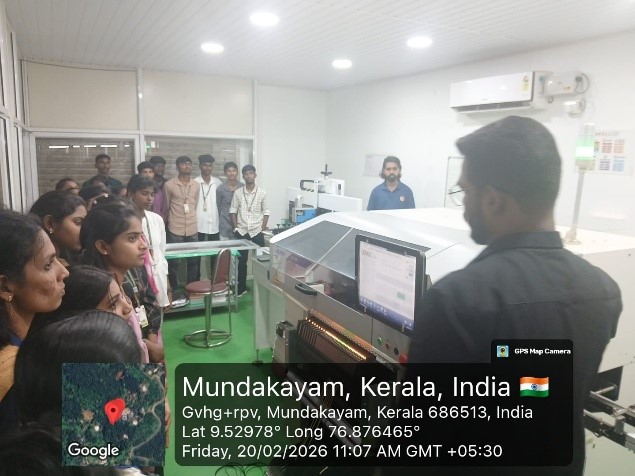
Encouraging workshops, industrial visits, and internships from early years to bridge theory with industry practice.
1. Audio Equalizers
Used in bass, treble, and tone control systems.
Example: Music equalizers in phones and speakers.
2. Wireless Communication
Used in band pass filtering to isolate specific frequency bands.
Example: Filtering channels in radio receivers.
3. Biomedical Instruments
Used in EEG and ECG monitoring devices for real-time filtering.
Mobile Call Noise Removal
When you speak during a phone call:
1. Microphone captures voice + noise
2. DSP processor applies a FIR/IIR filter
3. Noise frequencies are removed
4. Clear voice is transmitted
Simulation verification using MATLAB
Students gain the knowledge and practical skills to analyze, design, and implement digital filters to process signals effectively in modern engineering applications.
NAME OF THE COURSE: Digital Signal Processing
NAME OF THE INNOVATIVE TEACHING METHODOLOGY
EMPLOYED: Jigsaw Method
NAME OF THE TOPIC: LED Structures-Planar LED, Dome LED, Surface Emitter LED, Edge Emitter LED
NAME OF THE FACULTY: Mrs.M.SUGANYA,AP/ECE
The Jigsaw Method is a powerful cooperative learning strategy that helps students learn by teaching each other.
Step 1: Form “Home Groups”
● Divide class into groups of 4 students
● Each student is assigned one topic:
1. Planar LED
2. Dome LED
3. Surface Emitter LED
4. Edge Emitter LED
Step 2: Form “Expert Groups”
Students with the same topic gather together.
Each expert group studies:
● Structure/design
● Working principle
● Advantages
● Applications

Step 3: Expert Group Work (Guided Tasks)
Each group prepares:
● Simple diagram
● Key points
● Short explanation
Example focus:
Planar LED
● Flat surface emission
● Simple structure
Dome LED
● Dome-shaped lens
● Better light focusing
Surface Emitter LED
● Emits light perpendicular to surface
● Used in displays
Edge Emitter LED
● Emits light from edges
● Used in optical communication

Step 4: Return to Home Groups
● Each student teaches their topic
● Others take notes
● Group completes a comparison table

Assessment
● Quick quiz OR
● Ask questions like:
● Which LED is best for communication?
Which LED uses a lens?
Outcomes
Students will:
● Clearly differentiate LED types
● Understand structure Vs application
● Improve peer teaching skills
| Faculty | Topic | Subject | Approach used |
|---|---|---|---|
|
Mr.R.Guruprasath,AP/ECE |
Gas Leakage Alert System Using MQ2 Gas Sensor |
Sensors |
Project Based Learning |
Name of the Faculty: Mr. R. Guruprasath, AP/ECE
Name of the course: Sensors
Name of the Method Used: Project-Based Learning
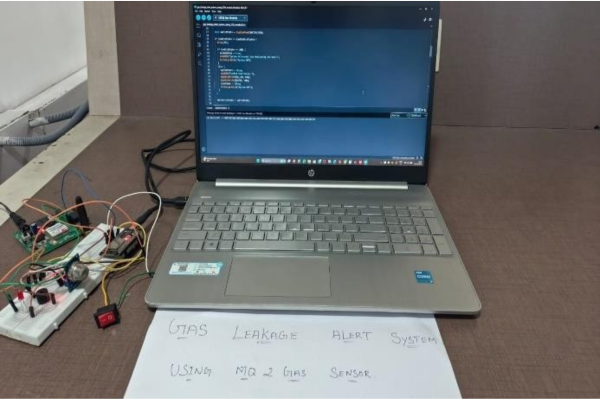
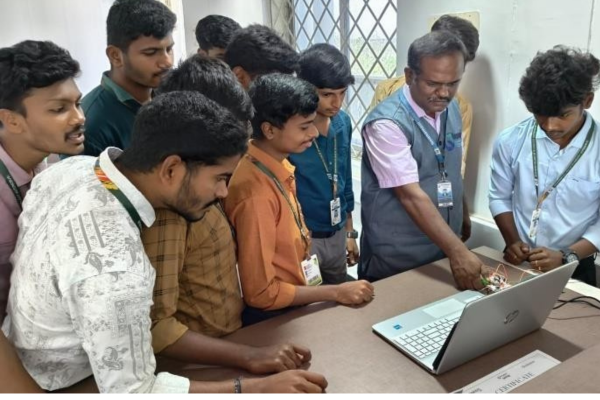
Topic Covered: Gas Leakage Alert System Using MQ2 Gas Sensor
IDEA: Created a smart safety system that detects gas leakage using a gas sensor and sends immediate alerts through SMS and phone call. It provides both local warnings (buzzer and LED) and remote alerts to ensure safety.
IMPLEMENTATION: The MQ gas sensor checks the gas level and sends the value to the ESP32. If the gas level increases, the red LED turns on and the buzzer sounds as a warning. At the same time, an SMS is sent and a phone call is made using the GSM module. The module works with AT commands and operates on a 2G network with a 12V, 1A power supply.
OUTCOME:
1. Enhanced teamwork and project planning skills
2. Increased confidence in building IoT projects
3. Improved programming skills
4. Experienced real-world project implementation