


Food Technology
Food Technology
Introduction
The Department of Food Technology is committed to excellence in education, research, and innovation in the field of food science and processing. The department aims to develop skilled professionals with strong technical knowledge and practical expertise to meet the growing demands of the food processing and allied industries.
The program integrates fundamental principles of food engineering, food chemistry, microbiology, nutrition, quality assurance, and food safety with modern processing technologies. Emphasis is placed on hands-on training, industry-oriented learning, and research-based problem-solving to ensure students are industry-ready and globally competitive.
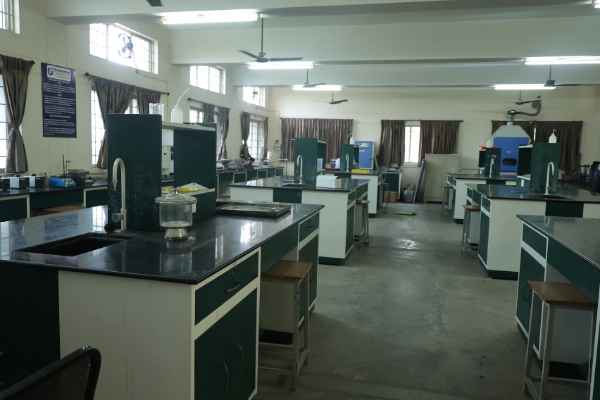
The department is supported by well-equipped laboratories, experienced faculty members, and strong industry–academia interactions. Through academic rigor, industrial exposure, internships, and research activities, the department strives to promote sustainable food production, value addition, innovation, and entrepreneurship while ensuring food safety and quality for society.
Profile
Food Technology
The Department of Food Technology at Gnanamani College of Technology was established in 2018 with a strong vision to promote innovation, excellence, and professionalism in the field of food science, processing, and technology. The department aims to develop competent and industry-ready food technologists who can effectively contribute to the food industry, research organizations, and academic institutions.
With a strong emphasis on innovation, sustainability, food safety, and skill development, the department equips students with sound theoretical knowledge and practical expertise to address global challenges related to food security, nutrition, quality assurance, and sustainable food systems. Through a well-structured curriculum, modern laboratory facilities, industry interaction, and research-oriented learning, the department nurtures future professionals capable of meeting the evolving demands of the food sector.
The Department of Food Technology remains committed to shaping responsible and skilled graduates who will play a vital role in ensuring a healthier, safer, and more sustainable global food system.
2018
Established
Food Technology
4 Years
Undergraduate
Scope of the Department
Interdisciplinary Education
- Principles of food processing and preservation
- Quality assurance and food safety standards
- Nutritional evaluation and product development
- Engineering aspects of unit operations in food industries
Core Skill Development
- Food analysis and instrumentation techniques
- Thermal and non-thermal food processing methods
- Food packaging technology
- Quality control and HACCP implementation
- Sensory evaluation and shelf-life studies
- Product formulation and standardization
Industry Applications
- Dairy and milk processing industries
- Meat, poultry, and seafood processing
- Bakery and confectionery units
- Beverage and fermentation industries
- Grain milling and cereal processing
- Food packaging and storage industries
- Also supports roles in regulatory bodies and quality certification agencies.
Research & Innovation
- Functional foods and nutraceuticals
- Food fortification and value addition
- Novel preservation technologies (e.g., high-pressure processing)
- Waste utilization and by-product valorization
- Food safety diagnostics and rapid detection methods
- Sustainable food processing technologies
- Focus is placed on innovation to improve food security and public health.
Hands-on Learning
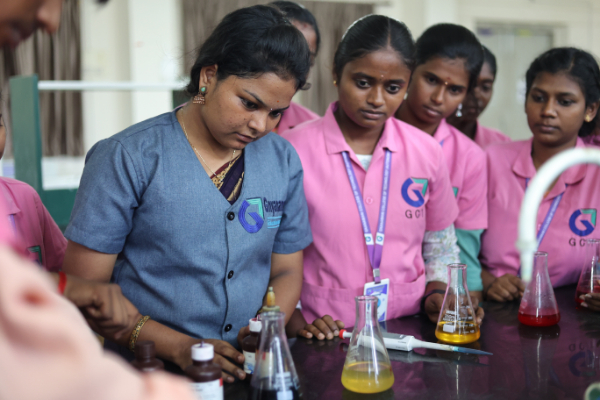
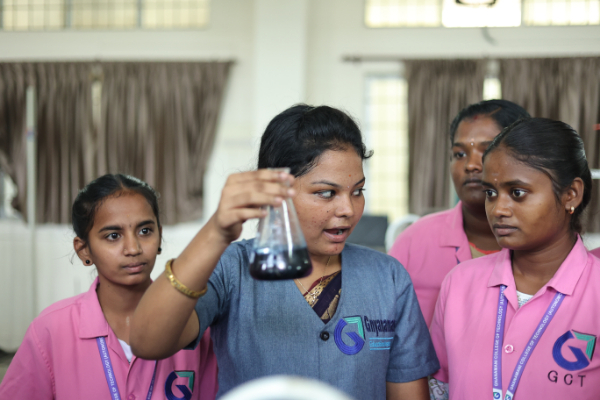
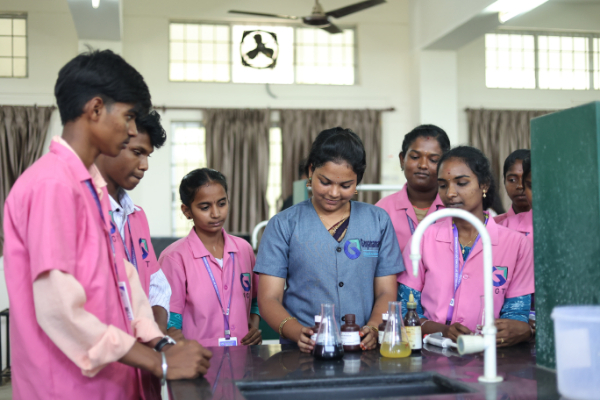
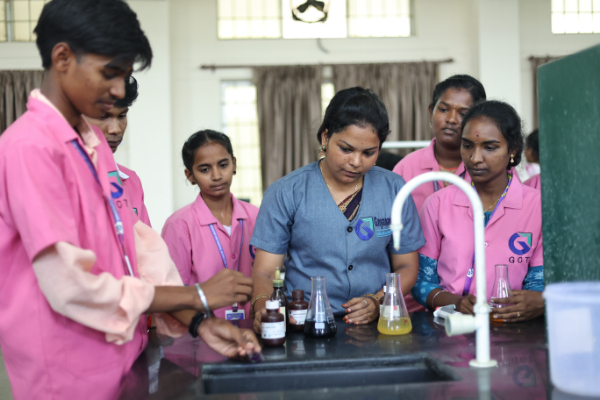
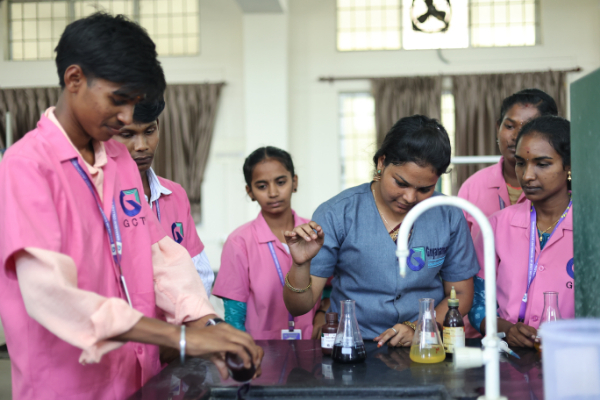
- Laboratory experiments
- Industrial training and internships
- Mini and major projects
- Industry visits
Career Opportunities
- Food Technologist
- Quality Control Officer
- Production Supervisor
- Food Safety Officer
- R&D Executive
Entrepreneurship
- Food processing units
- Bakery or dairy business
- Value-added food products
- Food testing consultancy
Future Scope
- Demand for safe and healthy food is increasing
- Food industries are growing
- New food products are developing every year
- Opportunities are available in India and abroadEmphasis on labs, projects, internships, hackathons, and industry collaborations.
Our Vision & Mission
Vision
To emerge out as a global competitive center of excellence and to produce competent technologists, scientists, researchers and entrepreneurs in food technology by imparting quality education with ethical values.
Mission
- To set up a center of excellence that grooms' future leaders who can make innovations that create developments in the food sector and also promote co-operation and networking with food processing industries, R&D institutions for achieving the goals effectively.
- To set up an infrastructure with constant upgradation of technical expertise, impactful applied research and competitive learning environment to contribute to the sustainability of the food system.
- To upgrade scientific knowledge in the areas of food science, food processing and safety for the sustainable development of food products through quality research thus paves the way for entrepreneurship.
Program Outcomes & Objectives
PEO-1: Graduates will showcase professional competency in food technology to solve problems in food science, food engineering, and processing with quality and safety.
PEO-2: Graduates will emerge as experts in recent techniques and skills in the field of food technology.
PEO-3: Graduates will function as individuals as well as in teams in the field of food technology.
Engineering knowledge: Apply the knowledge of mathematics, science, engineering fundamentals and an engineering specialization to the solution of complex engineering problems.
Problem analysis: Identify, formulate, review research literature, and analyze complex engineering problems reaching substantiated conclusions using first principles of mathematics, natural sciences and engineering sciences.
Design/development of solutions: Design solutions for complex engineering problems and design system components or processes that meet the specified needs with appropriate consideration for the public health and safety, and the cultural, societal and environmental considerations.
Conduct investigations of complex problems: Use research-based knowledge and research methods including design of experiments, analysis and interpretation of data and synthesis of the information to provide valid conclusions.
Modern tool usage: Create, select, and apply appropriate techniques, resources, and modern engineering and IT tools including prediction and modeling to complex engineering activities with an understanding of the limitations.
The engineer and society: Apply reasoning informed by the contextual knowledge to assess societal, health, safety, legal and cultural issues and the consequent responsibilities relevant to the professional engineering practice.
Environment and sustainability: Understand the impact of the professional engineering solutions in societal and environmental contexts, and demonstrate the knowledge of, and need for sustainable development.
Ethics: Apply ethical principles and commit to professional ethics and responsibilities and norms of the engineering practice.
Individual and team work: Function effectively as an individual and as a member or leader in diverse teams, and in multidisciplinary settings.
Communication: Communicate effectively on complex engineering activities with the engineering community and with society at large, such as, being able to comprehend and write effective reports and design documentation, make effective presentations and give and receive clear instructions.
Project management and finance: Demonstrate knowledge and understanding of the engineering and management principles and apply these to one’s own work, as a member and leader in a team, to manage projects and in multidisciplinary environments.
Life-long learning: Recognize the need for, and have the preparation and ability to engage in independent and life-long learning in the broadest context of technological change.
PSO-1: Operate effectively as a professional to analyze and solve problems in food industry.
PSO-2: Implement and integrate the basic knowledge of process Engineering & Technology in Food Formulation and new food product development for commercial purposes.
Development Activities

Integrating fundamental principles of food engineering, food chemistry, microbiology, nutrition, quality assurance, and food safety with modern processing technologies.

Organization of continuous learning events, including FDPs, STTPs, Conferences, Seminars, Guest Lectures, and Workshops.

Programs emphasize themes like Entrepreneurship, Startup Ecosystems, Lean Startup/MVP Approach, and Food Safety/Quality Certifications (e.g., Fostac, ISO 22000:2018).

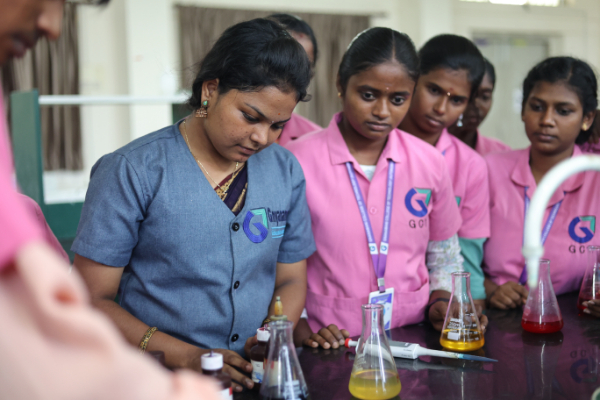
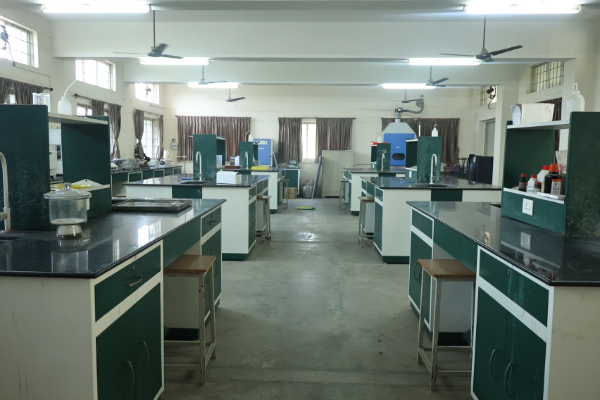
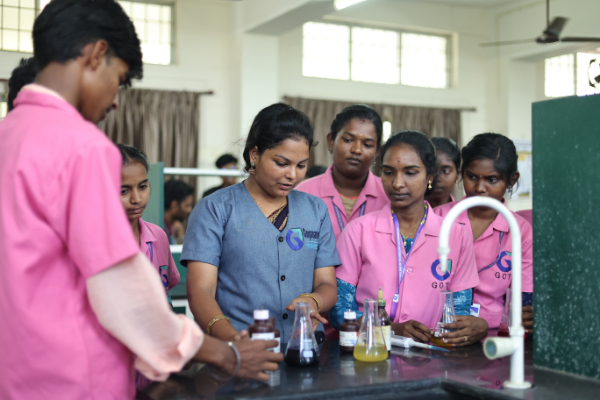
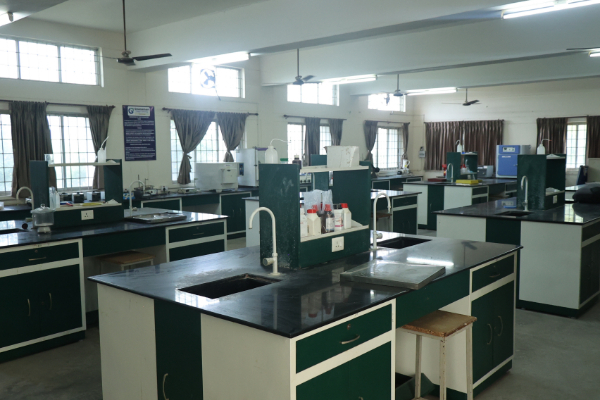
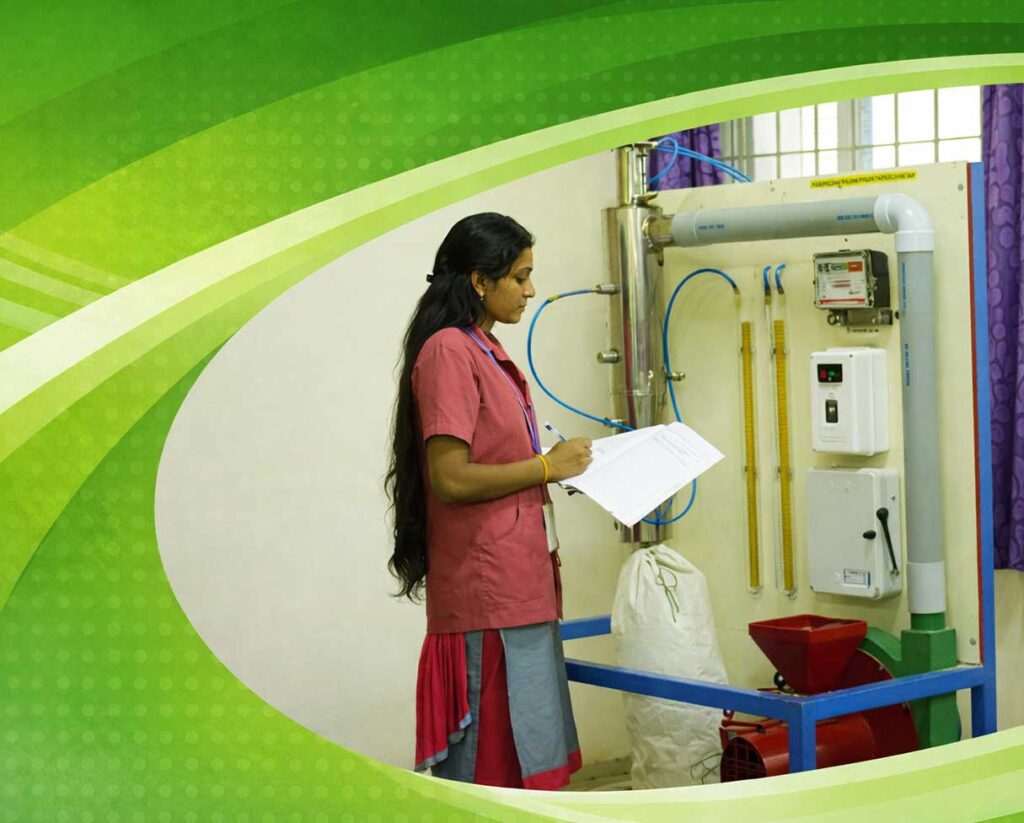
Maintaining well-established laboratories for practical learning, research, and skill development, including: Food Microbiology, Food Analysis, Biochemistry and Nutrition, Food Processing and Preservation, Baking and Confectionery, Testing of Packaging Materials, and Fruits and Vegetable Processing Technology.

Encouragement of projects in new product development, quality evaluation, food preservation, and sustainable packaging

Fostering strong industry-academia interactions, industrial exposure, and internships at companies like AAVIN, ITC Limited, Fibro Foods, and Ivory Gull Candy Company.

Signing MoUs with institutions and corporate houses (e.g., Fibro Foods Private Limited, Ivory Gull Candy Company).

Dedicated focus on innovation and entrepreneurship through activities like the Institution Innovation Council (IIC).

Faculty engaging in consultancy activities (e.g., product improvement projects) to bring industry experience into the classroom.
Lab Facility

23FT321
Food Microbiology Laboratory

23FT421
Unit Operations Laboratory

23FT422
Food Analysis Laboratory

23FT423
Biochemistry And Nutrition Laboratory

23FT521
Food Processing And Preservation Laboratory

23FT522
Baking And Confectionery Technology Laboratory

23FT621
Testing Of Packaging Materials Laboratory

23FT622
Food Process Engineering Laboratory

23FT721
Fruits And Vegetable Processing Technology Laboratory
| S. No. | Name of the Faculty | Qualification | Designation |
|---|---|---|---|
| Loading... | |||
| S. No. | Category | Members |
|---|---|---|
| 1 |
Chairperson (1Member) Head of the Department concerned |
Dr.V. Baskaran Dean -Chemical Sciences |
| 2 |
All Faculties Faculty members of the Department |
Faculty Members of the Department |
| 3 |
Subject Experts (2 Members) From outside the parent University Nominated by the Academic Council |
Dr. A. Arunagiri Associate Professor, Chemical Engineering, National Institute of Technology, 94438 08533 aagiri@nitt.edu |
|
Dr. N Samsudeen Associate Professor, Chemical Engineering, National Institute of Technology, Trichy - 620015 98941 82441 samsudeen@nitt.edu |
||
| 4 |
University Nominee (1Member) Nominated by the Vice-Chancellor |
Dr. P Selvamani Professor, Department of Pharmaceutical Technology, Bharathidasan Institute of Technology Campus, Anna University, Tiruchirapalli - 620024 98424 78785 selvamani@aubit.edu.in profselvamani@gmail.com |
| 5 | Representative from industry/corporate sector/allied areas (1Member) Nominated by the Principal |
Mr. R Shurya Chief Manager Sree Amogha Food Gallery Pvt Limited Namakkal - 637407 79041 83832 rshurya@gmail.com |
| 6 | College Alumni (1Member) Nominated by the Principal |
Mr. R Nishanth Plant Operator Sree Amogha Food Gallery Pvt Limited Namakkal - 637407 96292 17365 nishanth10072002@gmail.com |
| 7 | Experts (1 Industrial Expert + 1 Academic Expert) |
Dr C Sivakumar Managing Director Ensafe Technologies(P)Ltd., Salem - 636004. 94434 28302 infoensafetech@gmail.com |
| Dr. S Renganathan Professor Department of Biotechnology, Anna University, Chennai-600025 99416 13532 srenganathan@annauniv.edu |
| S. No. | Institution | Month & Year | Duration |
|---|---|---|---|
| Loading... | |||
| S. No. | Project Team | Register No | Student Name | Project Title | Mentor Name |
|---|---|---|---|---|---|
| Loading... | |||||
| S. No. | Name of the Student | Company Name | Start Date | End Date |
|---|---|---|---|---|
| Loading... | ||||
| S. No. | Academic Year | Students Participation Count | Prize Winners |
|---|---|---|---|
| Loading... | |||
| S. No. | Academic Year | Faculty Name | Awards |
|---|---|---|---|
| Loading... | |||
| S. No. | Date | Coordinator | Event | Guest Name | Company |
|---|---|---|---|---|---|
| Loading... | |||||