



Agricultural Engineering
Introduction
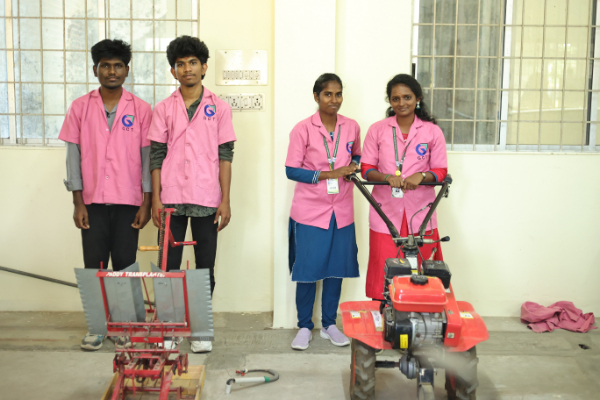
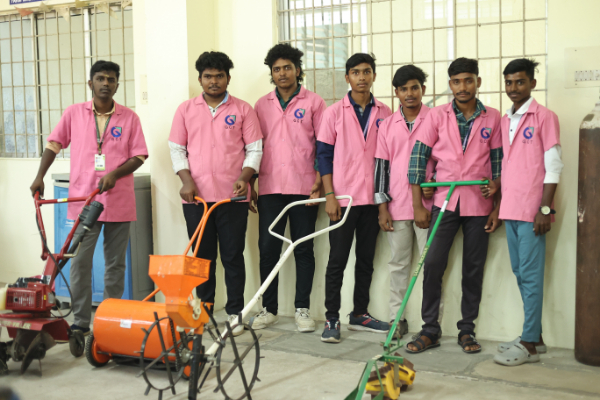
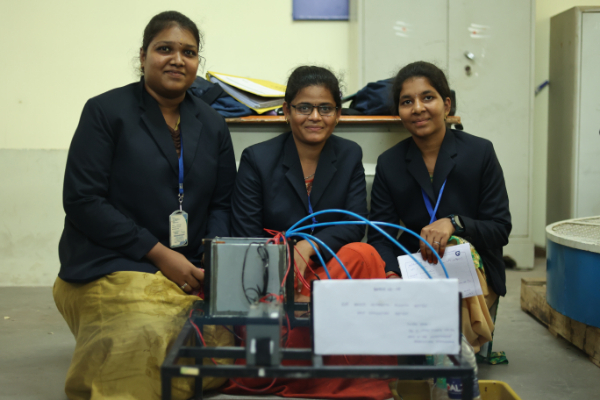
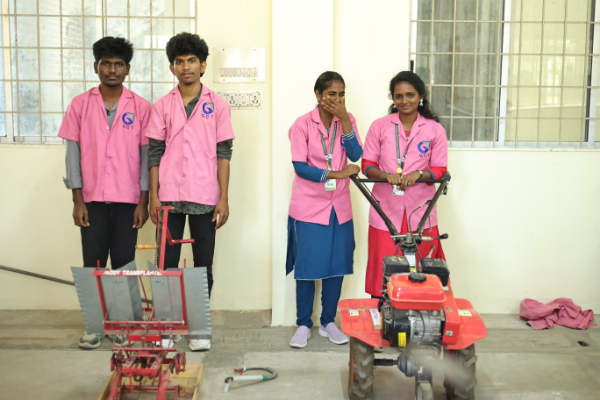
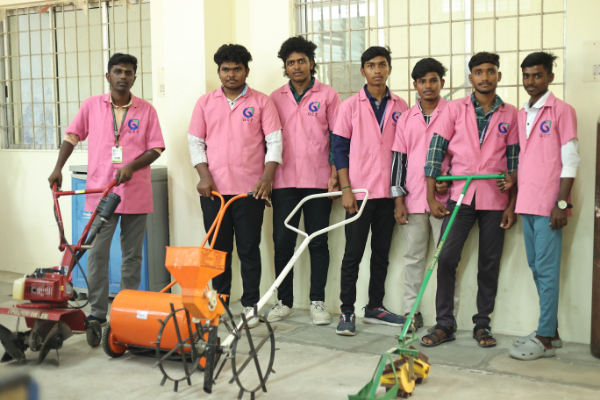
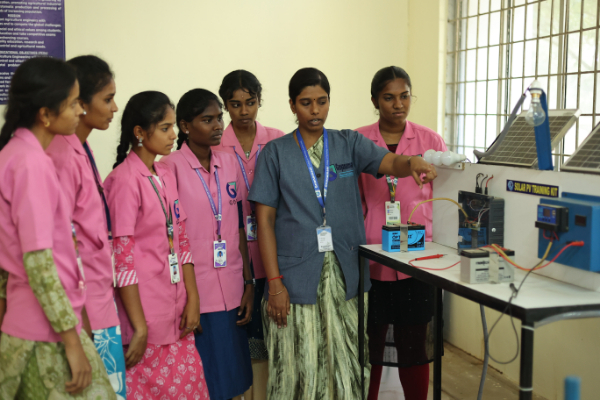
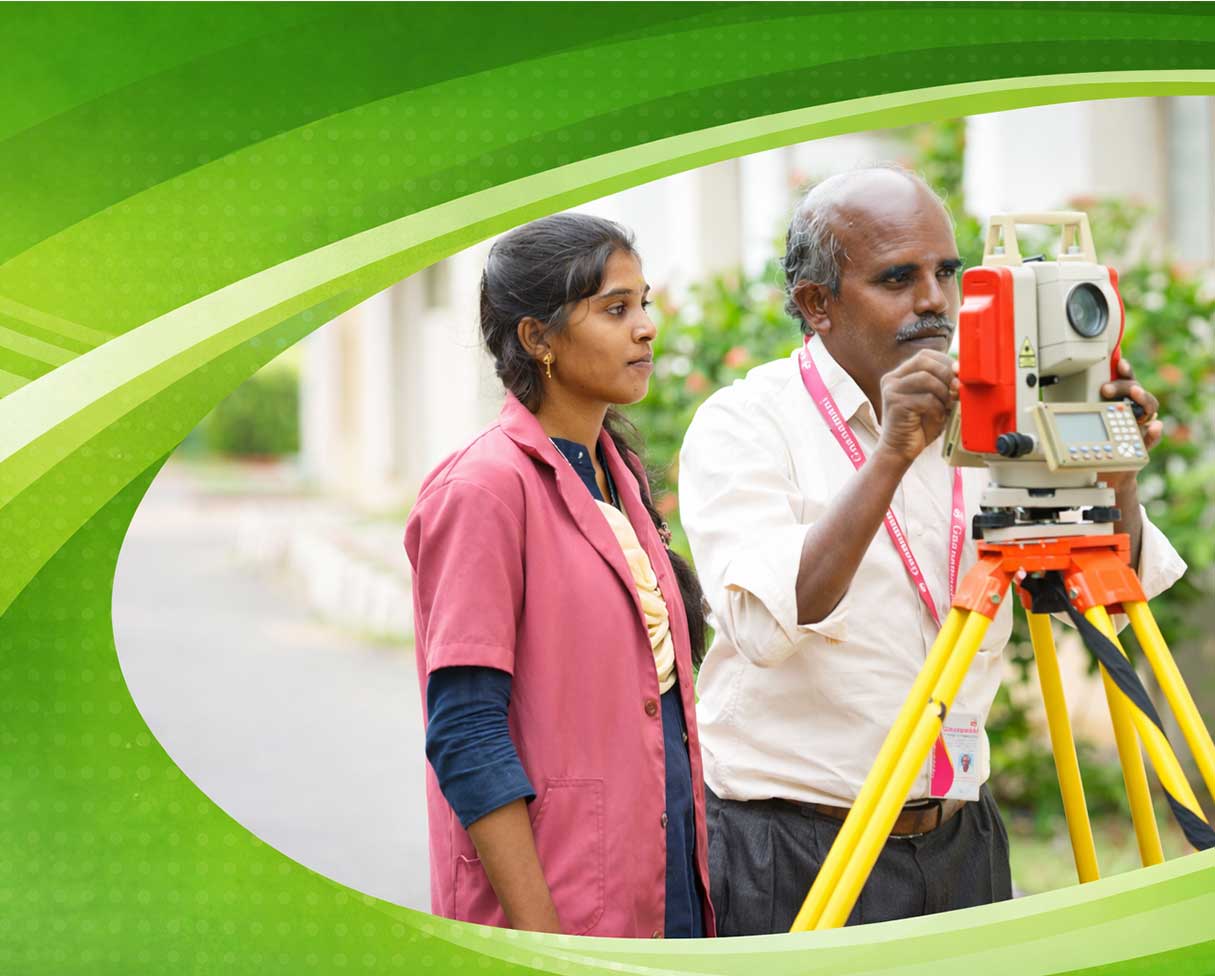
The Department of Agricultural Engineering was established in 2020 and offers a 4-year B.Tech. Degree programme in Agricultural Engineering. The programme is designed to provide students with practical training in the latest technologies in agricultural engineering. The department is equipped with state-of-the-art laboratory facilities and has qualified faculty and technical staff members. The department has excellent infrastructure with well-equipped laboratory facilities also with highly qualified members of faculty. Department has fully Mechanized Farm with 4 wheel drive tractor, all Farm Machineries and equipment’s. Department has fully modernized CAD and GIS laboratory.
Department has fully Mechanized Farm with 4-wheel drive tractor, all Farm Machineries and equipment’s. Department has fully modernized CAD and GIS laboratory. The department offer major specialization in crop husbandry, post-harvest technology, soil and water conservation. Each laboratory has its unique and wide scope for research work. Specially designed skill development programs are organized with support of industrial experts. To acquire the knowledge on crop cultivation aspects from seed to harvest, the department has 10 acres of farm especially for students practice along with well-equipped crop husbandry laboratory, agriculture meteorology observatory, and soil science laboratory for student’s agriculture practices.
Profile
Agricultural Engineering
The Department Agricultural has good infrastructure and it is well equipped with state- of- the art laboratory facilities necessary for imparting high quality education and is structured to meet our present day needs of the Agricultural Engineering field. The department has well experienced and qualified faculty members who are regularly presenting papers in national and international conferences and publishing their technical papers in reputed journals. Our main goal is to be the centre of excellence for the development and dissemination of knowledge in Agricultural Engineering, Environmental Engineering, Water Resources and Management, Soil and water conservation, and Remote sensing, GIS and its applications in ground water monitoring.
2020
Established
B.Tech. Agricultural Engineering
4 Years
Undergraduate (UG)
Scope of the Department
- Agricultural Engineering has a wide scope and focuses on applying engineering principles to improve farming efficiency, sustainability, and profitability.
- It covers areas such as farm mechanization, irrigation and water management, soil conservation, precision farming (drones and IoT), post-harvest technology, food processing, and renewable energy.
- Graduates find career opportunities in farm machinery manufacturing (Mahindra, John Deere), food processing industries (ITC, Nestlé), irrigation companies (Jain Irrigation), and agri-tech startups (CropIn, Ninjacart).
- They can also work in the government sector as Research Scientists (ICAR, IARI), Technical Officers (FCI, State Agriculture Departments), or Agricultural Officers (NABARD, SBI).
- Higher studies (M.Tech/Ph.D.) lead to research and teaching careers, while entrepreneurship and international roles with development organizations offer additional opportunities.
Our Vision & Mission
Vision
To be the center for excellence in Agriculture engineering by imparting quality education, promoting agriculture industrial innovation for the systematic production and processing of crops to meet the needs of increasing population.
Mission
- To produce competent Agriculture engineers with engineering principles and to compete the global challenges.
- To implant moral, social and ethical values among the students.
- To pursue higher education and take competitive exams and various career enhancing courses.
- To establish the quality education, research and consultancy for industrial and agriculture needs.
Program Outcomes & Objectives
- PEO-1: Apply their technical and allied knowledge to address agriculture and societal problems with creativity and ethical values.
- PEO-2: Convey and receive the problems and their solutions while working in teams and to become an effective leader.
- PEO-3: Produce the good farm machinery with strong fundamentals and work in accompany with industries and research organization as team members in inventing new technologies in agriculture engineering on multi-disciplinary projects and engaging in life-long learning
- Engineering knowledge:
Apply the knowledge of mathematics, science, engineering fundamentals and an engineering specialization to the solution of complex engineering problems - Problem analysis:
Identify, formulate, review research literature, and analyze complex engineering problems reaching substantiated conclusions using first principles of mathematics, natural sciences and engineering sciences. - Design/development of solutions:
Design solutions for complex engineering problems and design system components or processes that meet the specified needs with appropriate consideration for the public health and safety, and the cultural, societal and environmental considerations. - Conduct investigations of complex problems:
Use research-based knowledge and research methods including design of experiments, analysis and interpretation of data and synthesis of the information to provide valid conclusions. - Modern tool usage:
Create, select, and apply appropriate techniques, resources, and modern engineering and IT tools including prediction and modeling to complex engineering activities with an understanding of the limitations. - The engineer and society:
Apply reasoning informed by the contextual knowledge to assess societal, health, safety, legal and cultural issues and the consequent responsibilities relevant to the professional engineering practice. - Environment and sustainability:
Understand the impact of the professional engineering solutions in societal and environmental contexts, and demonstrate the knowledge of, and need for sustainable development. - Ethics:
Apply ethical principles and commit to professional ethics and responsibilities and norms of the engineering practice. - Individual and team work:
Function effectively as an individual and as a member or leader in diverse teams, and in multidisciplinary settings. - Communication:
Demonstrate knowledge and understanding of the engineering and management principles and apply these to one’s own work, as a member and leader in a team, to manage projects and in multidisciplinary environments. - Project management and finance:
Demonstrate knowledge and understanding of the engineering and management principles and apply these to one’s own work, as a member and leader in a team, to manage projects and in multidisciplinary environments. - Life-long learning:
Recognize the need for, and have the preparation and ability to engage in independent and life-long learning in the broadest context of technological change
1: Apply the mathematical and the computing knowledge to identify and provide solutions for computing problems.
2: Design and develop computer programs in the areas related to algorithms, networking, and web design and data analytics of varying complexity.
Development activities
Curriculum Development
Curriculum development aligned with national agricultural priorities and emerging industry trends, incorporating Agriculture 4.0 concepts such as precision farming, drone technology, GIS, and IoT applications.
Value-added courses
Introduction of value-added courses on IoT, GIS, precision agriculture, and drone technology to enhance employability and practical skills
Competitions & Workshops
organization of workshops, FDPs, seminars, and webinars on emerging agricultural technologies for capacity building and professional development.
Equipment Infrastructure
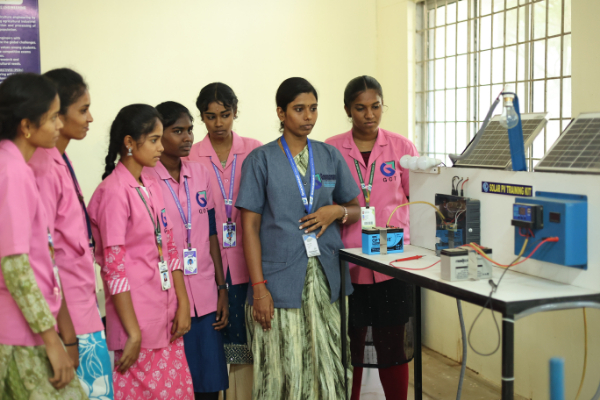
Establishment of agricultural laboratories equipped with modern tools and equipment infrastructure to support teaching, research, and innovation
Agricultural challenges
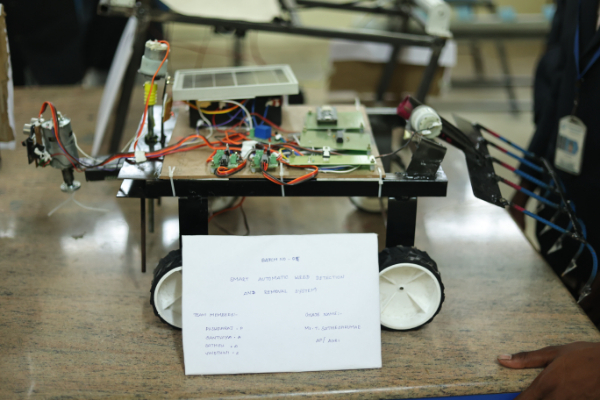
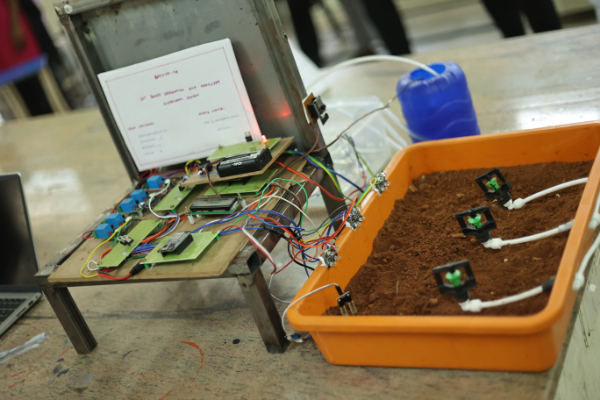
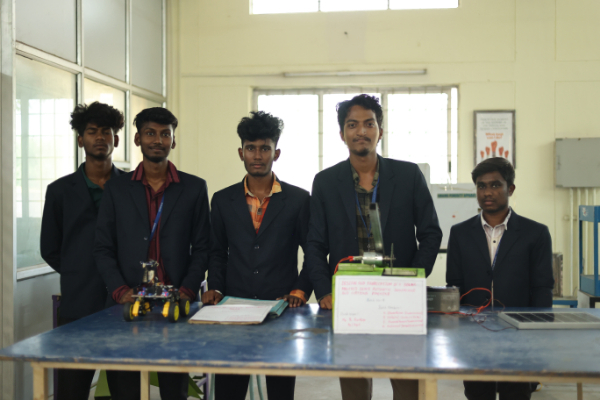
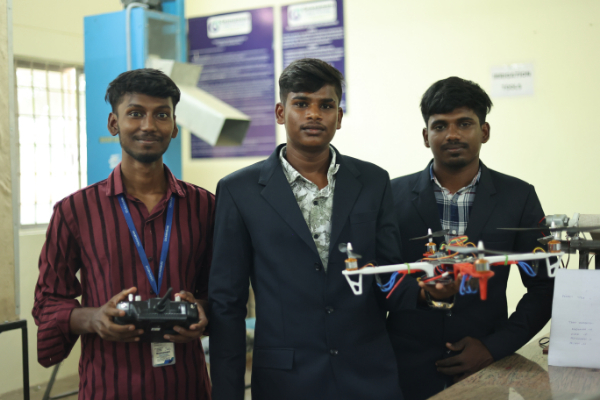
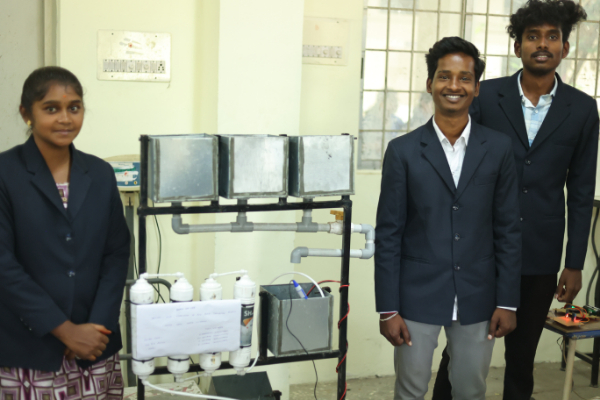
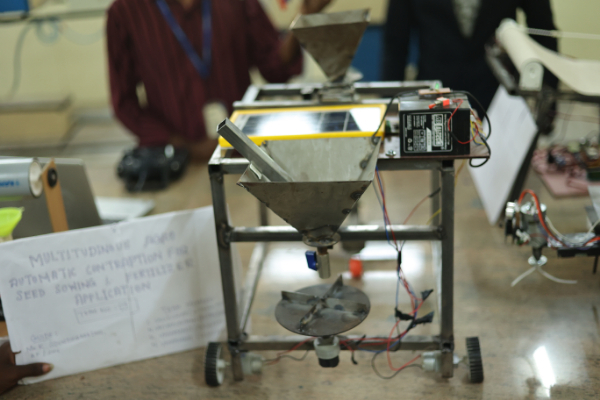
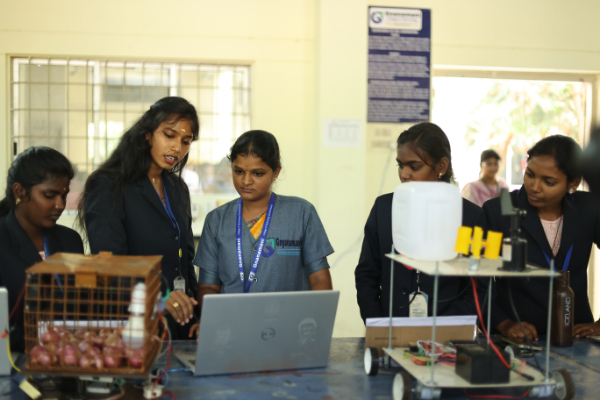
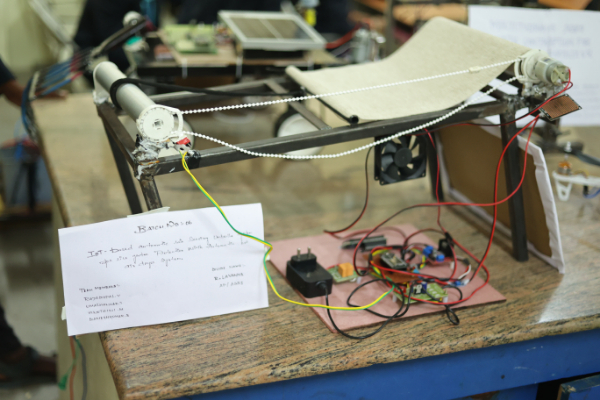
Promotion of student projects in drone technology, GIS, IoT, and real-world problem solving to address practical agricultural challenges.
Industry collaboration
Industry collaboration through guest lectures, internships, MoUs, and industrial visits
Research projects
Encouragement of research activities, publications, patents, and funded research projects
Faculty development
Faculty development through training programs, certifications, and research collaborations
Entrepreneurship & innovation
Support for startups, entrepreneurship, and innovation through incubation and mentoring
Automation Domains
Integration of Iot applications in agriculture, drones, smart cities, and automation domains
Continuous Assessment
Continuous assessment and improvement based on student performance and industry feedback
Lab Facility
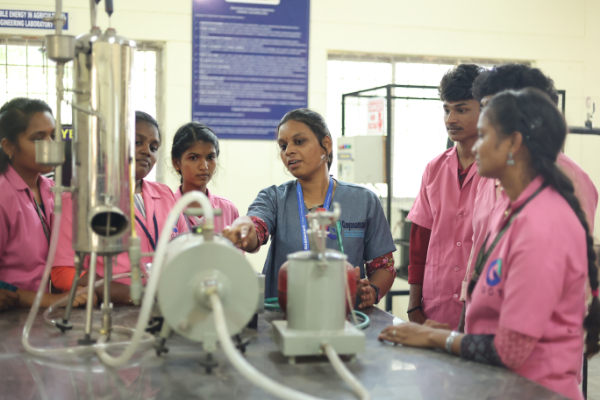
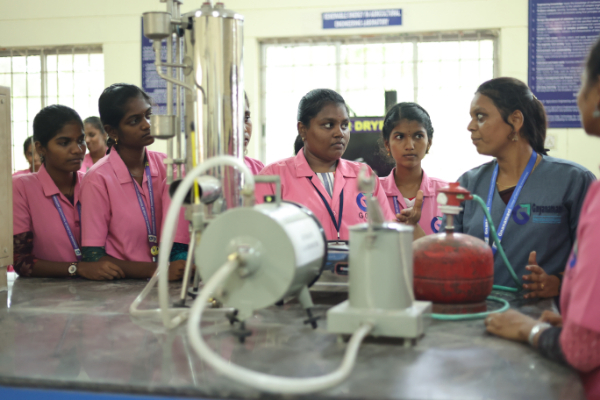
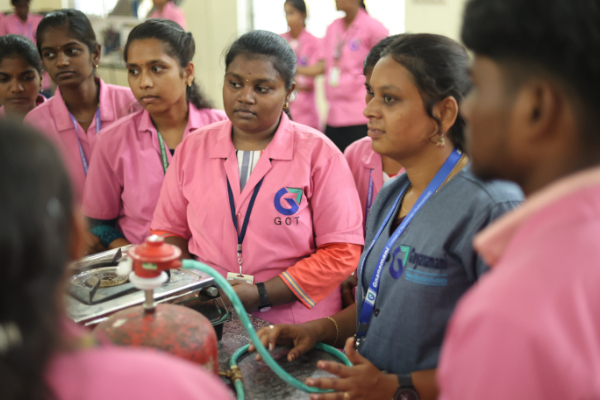
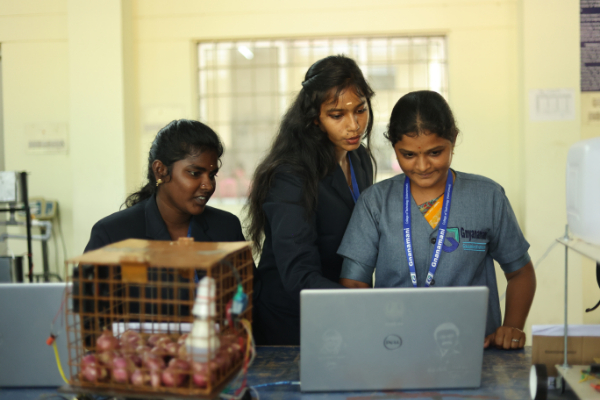
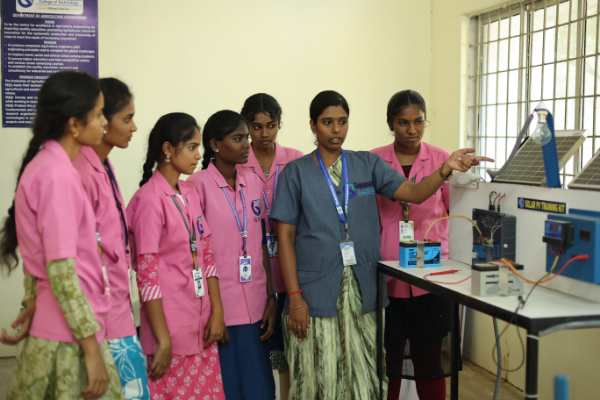
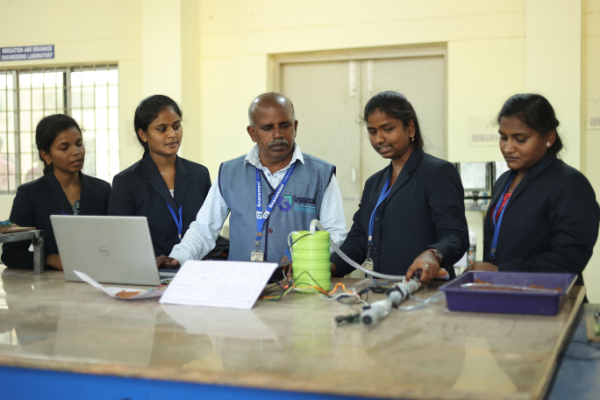
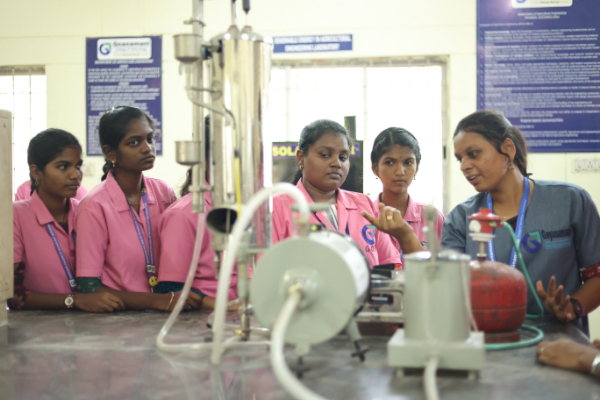
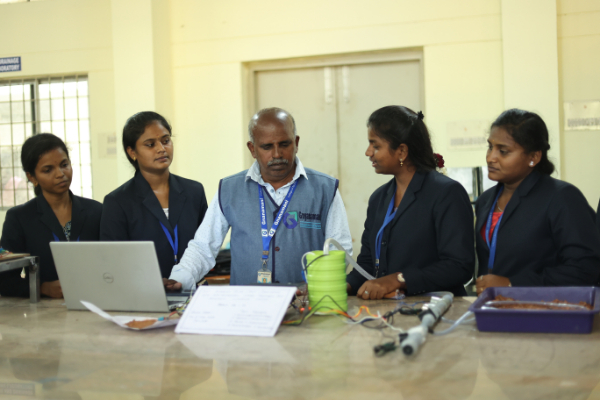
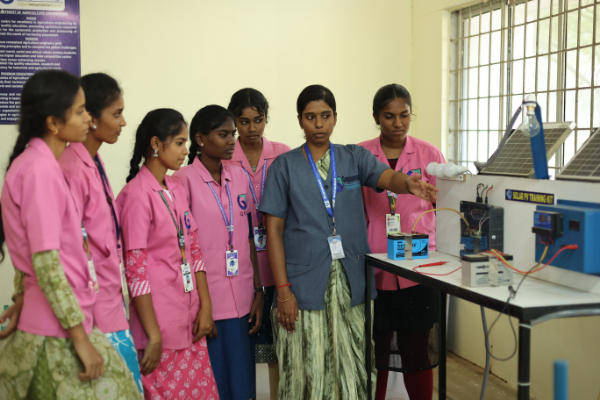
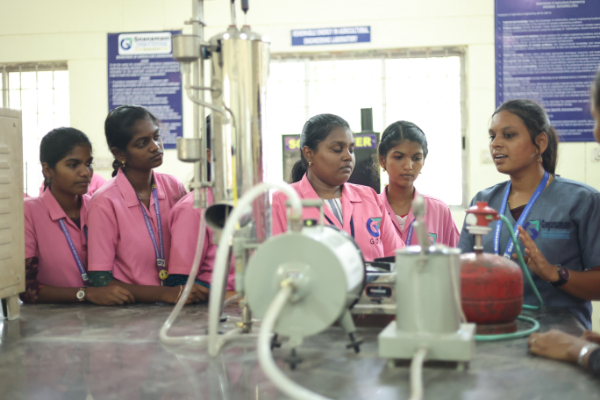
- The department is equipped with well-established and modern laboratory facilities that support hands-on learning, practical skill development, and research-oriented activities in the areas of crop production, irrigation, post-harvest technology, remote sensing and GIS applications, and emerging technologies. These laboratories are designed to bridge the gap between theoretical concepts and real-world applications by providing access to industry-relevant equipment. Each laboratory supports curriculum requirements and fosters experimentation, innovation, and problem-solving skills among students.
Lab List

Principles and Practices of Crop Production laboratory

Post-Harvest Engineering Laboratory

Surveying and Levelling Laboratory

Fluid mechanics and thermal system laboratory

Soil Science Laboratory

Strength of Materials Laboratory

Tractor and Farm Engines Laboratory

Irrigation Field Laboratory

Farm Machinery Laboratory

CAD for Agricultural Engineering

GIS Laboratory for Agricultural Engineers

Renewable Energy Laboratory
| S. No. | Name of the Faculty | Qualification | Designation |
|---|---|---|---|
| Loading... | |||
| S. No. | Category | Members |
|---|---|---|
| 1 |
Chairperson (1Member) Head of the Department concerned |
Mr. K. Soundhirarajan Head of the Department |
| 2 |
All Faculties Faculty members of the Department |
Faculty Members of the Department |
| 3 |
University Nominee (1Member) Nominated by the Vice-Chancellor |
Dr. M. Purushothaman, Associate Professor, Department of Civil Engineering, Government College of Engineering, Bodinayakanur - 625582 94435 22727 emp4624@gmail.com |
| 4 |
All Faculties Faculty members of the Department |
Faculty Members of the Department |
| 5 |
Subject Experts (2Members) From outside the parent University Nominated by the Academic Council |
Dr. V. Karthik Associate Professor, Department of Civil Engineering, Karpagam Academy of Higher Education, (Deemed to be University) Coimbatore - 641021 81226 25335 Karthice1@gmail.com |
|
Dr. S. Periyar Selvam Associate Professor, Department of Food Process Engineering, SRM Institute of Science and Technology, Kattankulathur - Chennai 79042 50136 periyars@srmist.edu.in |
||
| 6 | Representative from industry/corporate sector/allied areas (1Member) Nominated by the Principal |
Dr. P. Balaganesh Social Innovator Sparsh SIIP, DBT BIRAC, KIIT TBI, Bhubaneshwar, Odisha 99947 37950 balachem.aec@gmail.com |
| 7 | College Alumni (1Member) Nominated by the Principal |
Mr. C. Sundararajan, Project Engineer, MS Construction, Vaiyappamalai, Tiruchengode - 637410 96981 60861 ersundar.2020@gmail.com |
| 8 | Experts (1 Industrial Expert + 1 Academic Expert) Outside the Autonomous College, whenever special courses of studies are to be formulated Nominated by the Principal |
Mr. P. Chandru Safety officer and Trainer, Komastu India Private limited, Sriperumbudur- 637001 97919 89494 chandru2911090@gmail.com |
| Dr. A. Mohanraj Assistant Professor (sl.G), Civil Engineering, Bannariamman Institute of Technology, Sathiyamangalam - 638 401 95005 77575 mrmohanpro29@gmail.com |
| S. No. | Institution | Month & Year | Duration |
|---|---|---|---|
| Loading... | |||
| S. No. | Project Team | Register No | Student Name | Project Title | Mentor Name |
|---|---|---|---|---|---|
| Loading... | |||||
| S. No. | Name of the Student | Company Name | Start Date | End Date |
|---|---|---|---|---|
| Loading... | ||||
| S. No. | Academic Year | Students Participation Count | Prize Winners |
|---|---|---|---|
| Loading... | |||
| S. No. | Date | Coordinator | Event | Guest Name | Company |
|---|---|---|---|---|---|
| Loading... | |||||
| S. No. | Academic Year | Inventor(s) | Title | Application No. | Status |
|---|---|---|---|---|---|
| Loading... | |||||
| S. No. | Name of the Supervisor & Department |
Supervisor No | Name of the Scholar | Date of Registration | Name of the University | Full Time / Part Time | Title of Research | Name of the Organization | Pursuing / Completed (Month/Year) |
|---|---|---|---|---|---|---|---|---|---|
| Loading... | |||||||||