


Electrical and Electronics Engineering
Electrical and Electronics Engineering
Introduction
Electrical and Electronics Engineering continues to transform the way we live from the latest consumer products to sophisticated scientific, industrial, Renewable Energy, Electric vehicle management and healthcare technologies.
Department enhance the cutting edge technologies based Centre of Excellence equipped Integrating Artificial Intelligence, Internet of Things, 5G Network communication, Cloud computing, computer programming, electronics and communication with electrical engineering, makes this discipline the most empowerment branch of engineering. Job opportunities are ample in both private and public sector units like Electrical Design, Electric vehicle and controller design, Power Plants, Automation Industries, Railways, Utility Companies, Civil Aviation and all types of manufacturing industries.
Profile
Electrical and Electronics Engineering
- Accredited by NAAC with "A" Grade
- Department is accredited by NBA.
- Permanently affiliated with Anna University
- MoU's with leading industries
- Produced 1203 alumni's
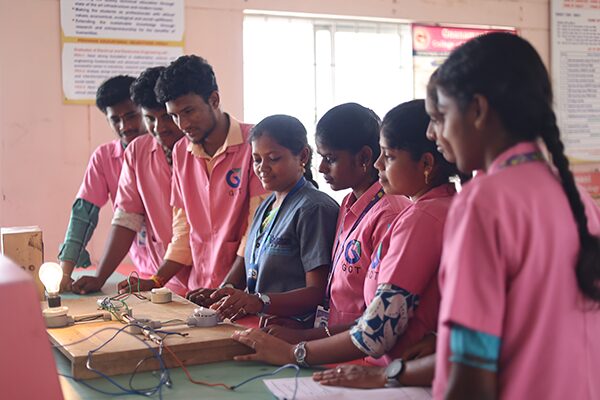
- Industry Supported Labs to meet the demand of modern industrial needs
- Innovation and Start-ups for building Entrepreneur Dream
- Professional Society such as IEEE, ISTE & IEI
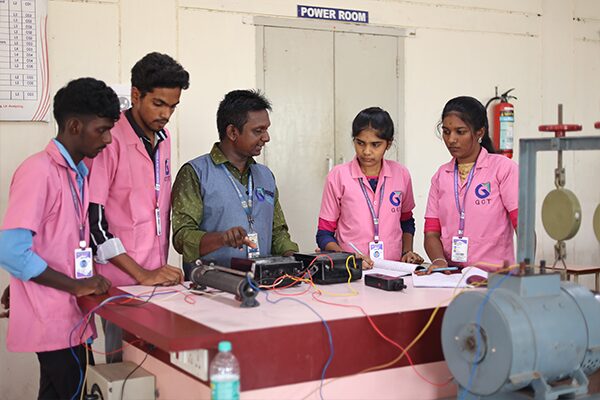
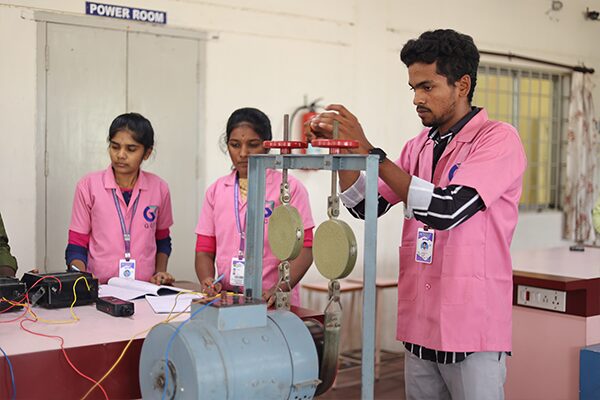
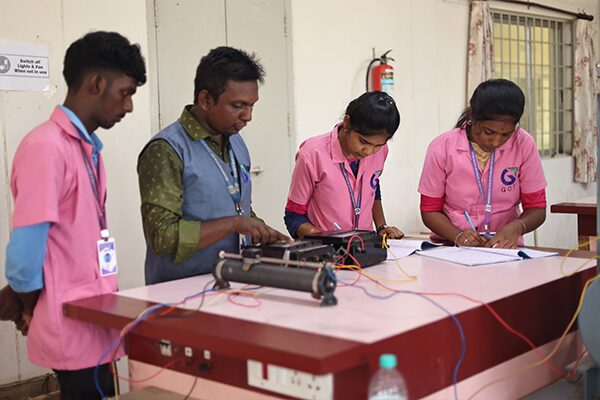
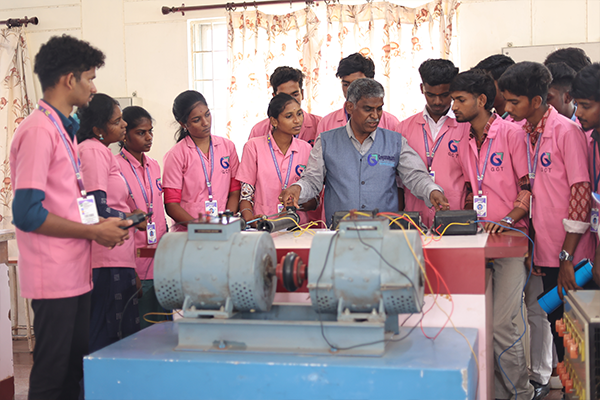
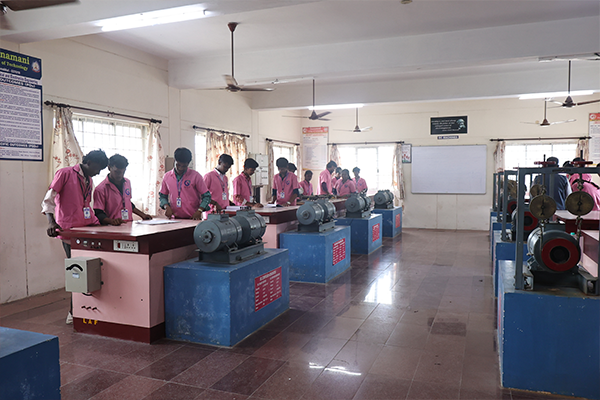
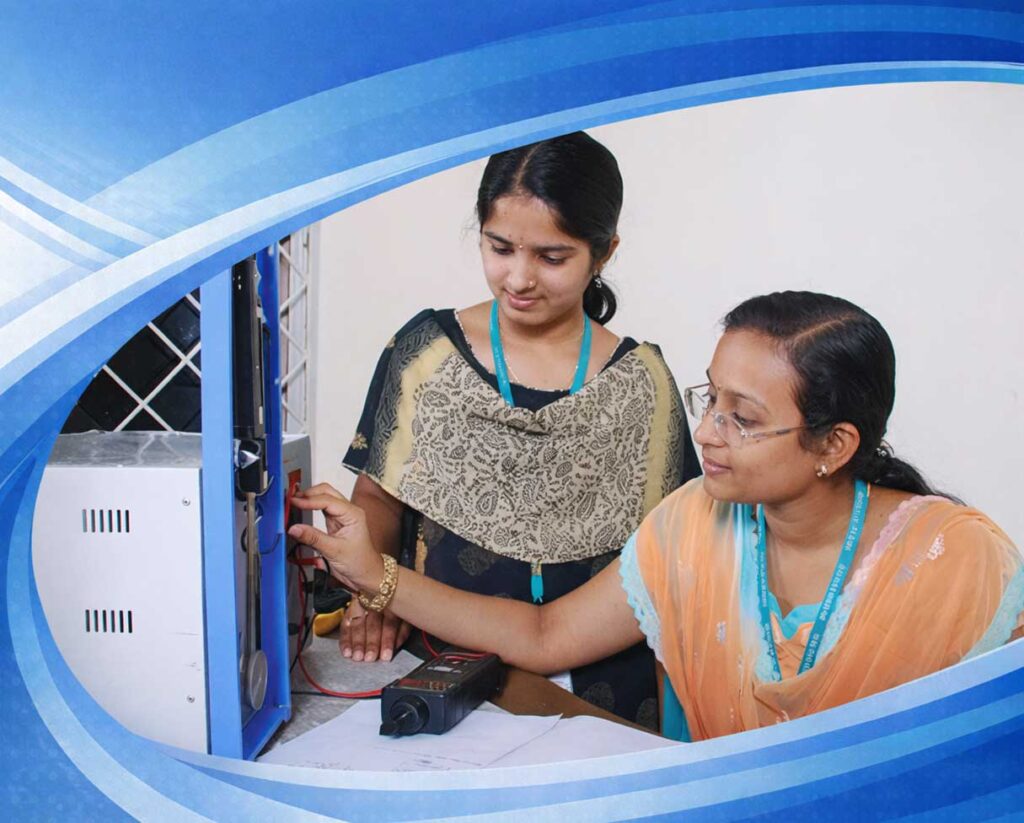
- All the laboratories are well equipped with excellent infrastructure and state of the art equipment.
- Solar powered Laboratories.
- Centre of Excellence to meet modern requirements like AI, IOT, 5G Networks, IIOT, and Cloud computing.
- IIT Bombay Recognized Centre of Excellence named "e-Yantra".
- Anna University Recognized Research and Development Center named "GNAN Expert".
2006
Established
Electrical and Electronics Engineering
4 Years
Undergraduate
Scope of the Department
- Tamil Nadu Electricity Board (TNEB)
- Power Grid Corporation of India Limited
- National Thermal Power Corporation (NTPC)
- Nuclear Power Corporation of India Limited (NPCIL)
- Indian Railways
- Bharat Heavy Electricals Limited (BHEL)
- Public Work Department (PWD)
- Hindustan Aeronautics Limited (HAL)
- Research Oriented Prestigious Jobs: Indian Space Research Organization (ISRO), DRDO, BARC and NTRO.
- Indian Armed Forces
- Public Sector Units: PGCIL, IOCL, BPCL, ONGC, SAIL, Coal India, NHPC, GAIL
Our Vision & Mission
Vision
To produce competent and socially responsible Electrical Engineers with innovative minds.
Mission
- To provide quality education to shape skilled responsible engineers
- To promote learning, innovation and research to solve real-life problems
- To develop skills, support start-ups and work with industries to help society.
Program Outcomes & Objectives
- PEO-1: Have strong foundation in mathematics, science, and engineering fundamentals and advanced concepts towards their successful career in industries, research and entrepreneur.
- PEO-2: Analyze, design and implement various electrical, electronics and interdisciplinary projects, addressing the industrial and social needs.
- PEO-3: Have effective communication and leadership skills with ethical values.
- Engineering knowledge: Apply the knowledge of mathematics, science, engineering fundamentals and an engineering specialization to the solution of complex engineering problems.
- Problem Analysis: Identify, formulate, review research literature, and analyze complex engineering problems reaching substantiated conclusions using first principles of mathematics, natural sciences and engineering sciences.
- Design/Development of Solutions: Design solutions for complex engineering problems and design system components or processes that meet the specified needs with appropriate consideration for public health and safety, and the cultural, societal and environmental considerations.
- Conduct Investigations of Complex Problems: Use research-based knowledge and research methods including design of experiments, analysis and interpretation of data and synthesis of the information to provide valid conclusions.
- Modern Tool Usage: Create, select, and apply appropriate techniques, resources, and modern engineering and IT tools including prediction and modeling to complex engineering activities with an understanding of the limitations.
- The Engineer and Society: Apply reasoning informed by the contextual knowledge to assess societal, health, safety, legal and cultural issues and the consequent responsibilities relevant to the professional engineering practice.
- Environment and Sustainability: Understand the impact of the professional engineering solutions in societal and environmental contexts, and demonstrate the knowledge of, and need for sustainable development.
- Ethics: Apply ethical principles and commit to professional ethics and responsibilities and norms of the engineering practice.
- Individual and Team Work: Function effectively as an individual and as a member or leader in diverse teams, and in multidisciplinary settings.
- Communication: Communicate effectively on complex engineering activities with the engineering community and with society at large, such as, being able to comprehend and write effective reports and design documentation, make effective presentations and give and receive clear instructions.
- Project Management and Finance: Demonstrate knowledge and understanding of the engineering and management principles and apply these to one’s own work, as a member and leader in a team, to manage projects and in multidisciplinary environments.
- Life-long Learning: Recognize the need for, and have the preparation and ability to engage in independent and life-long learning in the broadest context of technological change.
- 1: Attain in-depth knowledge and design skills in Electrical Power Systems, Electrical Drives, Power Electronics and Control, Electronics and Digital Electronics.
- 2: Acquire specialized skills in Solar Power Applications, High Voltage Engineering and competency for competitive examinations.
Development Activities

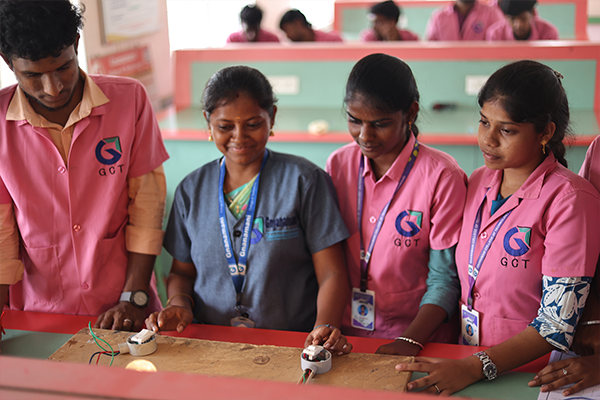
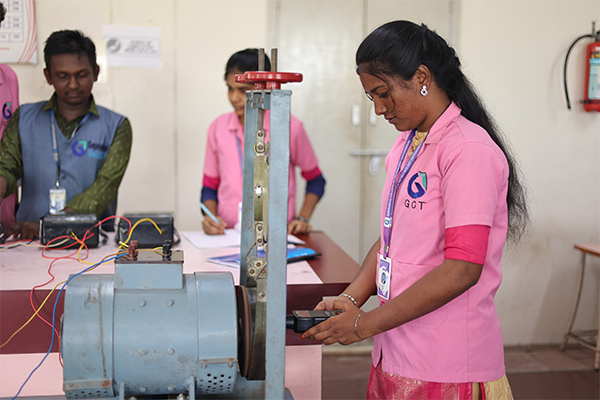
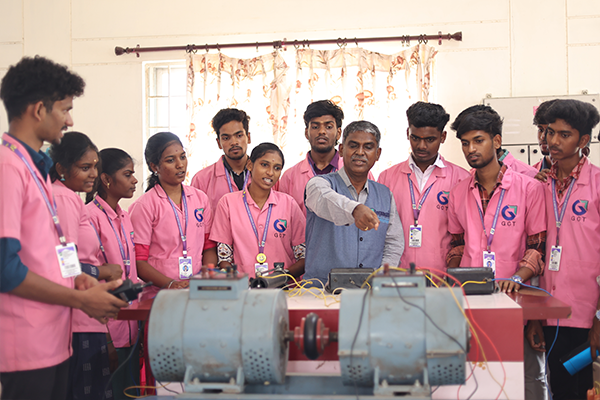
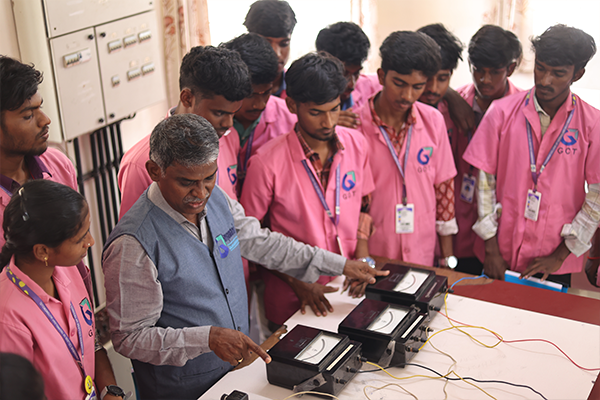
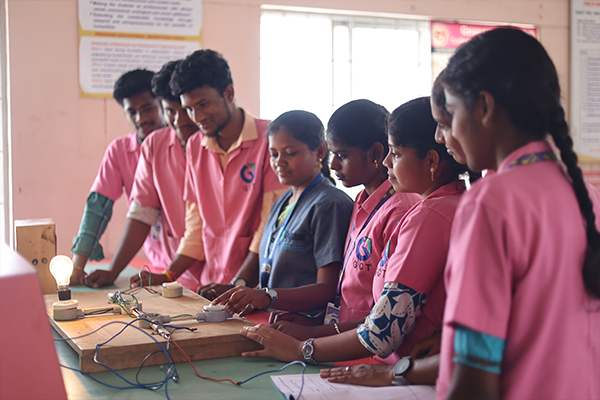
Hands-on training in electrical machines, power electronics, and control systems

Software training: MATLAB/Simulink, LabVIEW, AutoCAD Electrical

Coding skills (Python, embedded C for controllers)

Innovation and startup awareness programs

Simulation-based learning and virtual labs

Industry-based mini and major projects
Internship programs and in-plant training

Industry advisory board meetings

Expert talks on real-time applications

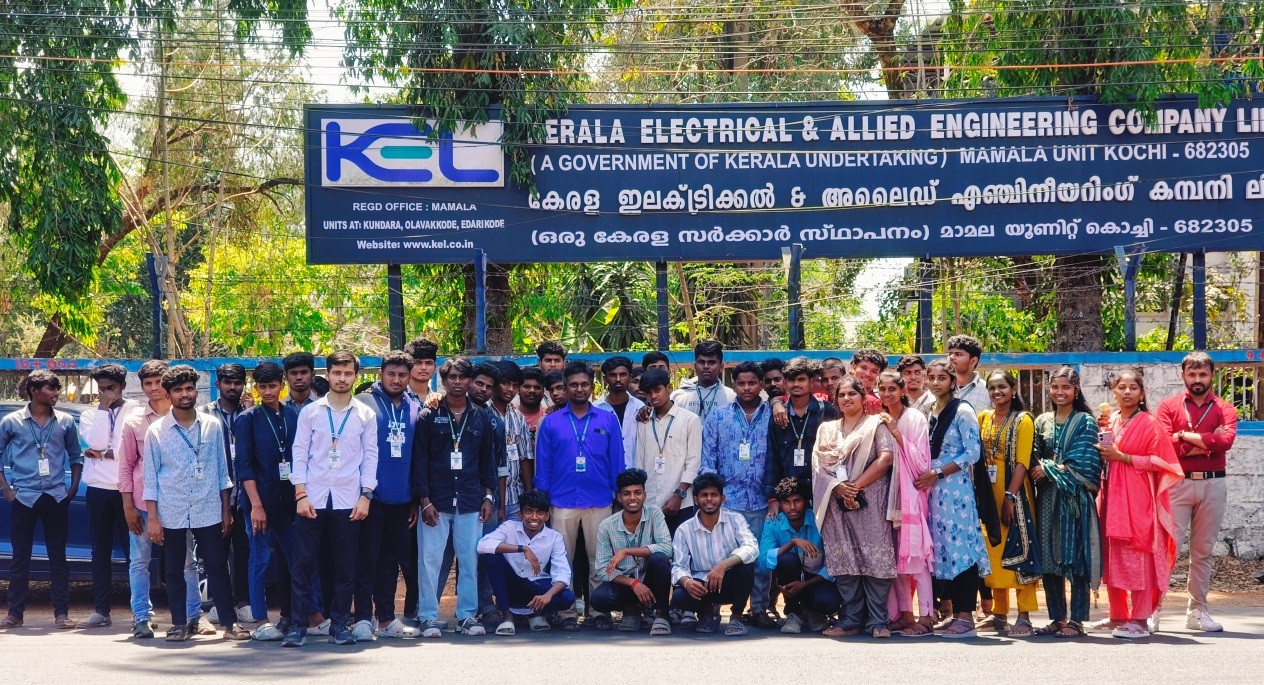
Industry collaboration through guest lectures, internships, MoUs, and industrial visits

Encouragement of research activities, publications, patents, and funded research projects

Continuous assessment and improvement based on student performance and industry feedback

Peer teaching and mentoring programs

Establishment of research labs and centers of excellence

Guest lectures by industry experts and alumni
List of Laboratories
Engineering Practices Laboratory
Electric Circuits Laboratory
Electrical Machines Laboratory-I
Electrical Machines Laboratory-II
Microprocessor and Microcontroller Laboratory
Linear and Digital Circuits Laboratory
Measurements and Instrumentation Laboratory
Control Systems Laboratory
Power Electronics Laboratory
Power System Simulation Laboratory

Renewable Energy Systems Laboratory
Laboratory Facility
Control & Instrumentation Laborotary
Electronics Laborotary
Renewable Energy Systems Laborotary
Electrical Machines Laboratory
Center of Excellence
Gnan Expert- High Voltage Engineering R&D Laborotary
Embedded System & Robotics Laborotary- Centre of Excellence
| S. No. | Name of the Faculty | Qualification | Designation |
|---|---|---|---|
| Loading... | |||
| S. No. | Category | Members |
|---|---|---|
| 1 |
Chairperson Head of the Department concerned |
Dr. J. Chandramohan Head of the Department |
| 2 |
University Nominee Nominated by the Vice-Chancellor |
Dr. T. Aruldoss Albert Victoire Associate Professor Department of Electrical &Electronics Engineering Anna University, Regional Campus Coimbatore Maruthamalai Main Road, Navavoor, Coimbatore-641046 73971 09245 t.aruldoss@gmail.com |
| 3 |
Subject Experts From outside the parent University Nominated by the Academic Council |
Dr. N. P. Subramaniam Associate Professor/EEE Puducherry Technological University (Formerly Pondicherry Engineering College) Puducherry - 605014 94864 41444 npsubbu@ptuniv.edu.in |
|
Dr. S. Muthubalaji Professor/EEE CMR College of Engineering and Technology, Hyderabad, Telangana 90470 40978 muthusa15@cmrcet.ac.in |
||
| 4 | Representative from industry/corporate sector/allied areas Nominated by the Principal |
Mr. D. Gobinath Managing Director Transtech Tronic systems, Madurai 98421 95449 transtechtronics@yahoo.co.in |
| 5 | Experts Outside the Autonomous College, whenever special courses of studies are to be formulated Nominated by The Principal |
Dr. M. Vijayakumar Manager (R&D) Indiguard Systems Pvt Ltd, Thanjavur. 94880 12038 indiguard@gmail.com |
| Dr. M. Saravanan Professor/EEE Thiagarajar College of Engineering, Madurai. 98434 74170 mseee@tce.edu |
||
| 6 | College Alumni Nominated by the Principal |
Mr. R. Subramani Senior Software Engineer, Bosch Global Software Technologies, Coimbatore. 90251 85237 subramanieee2016@gmail.com |
| 7 |
All Faculties Faculty members of the Department |
Faculty Members of the Department |
| S. No. | Institution | Month & Year | Duration |
|---|---|---|---|
| Loading... | |||
| S. No. | Project Team | Register No | Student Name | Project Title | Mentor Name |
|---|---|---|---|---|---|
| Loading... | |||||
| S. No. | Name of the Student | Company Name | Start Date | End Date |
|---|---|---|---|---|
| Loading... | ||||
| S. No. | Academic Year | Students Participation Count | Prize Winners |
|---|---|---|---|
| Loading... | |||
| S. No. | Academic Year | Faculty Name | Awards |
|---|---|---|---|
| Loading... | |||
| S. No. | Date | Coordinator | Event | Guest Name | Company |
|---|---|---|---|---|---|
| Loading... | |||||
| S. No. | Name of Author | Title of Paper | Name of Journal with ISSN No. | Web of Science / Scopus | Vol., Issue, Page No. | Published Month & Year |
|---|---|---|---|---|---|---|
| Loading... |
| S. No. | Academic Year | Inventor(s) | Title | Application No. | Status |
|---|---|---|---|---|---|
| Loading... | |||||
| S. No. | Name of the Supervisor & Department |
Supervisor No | Name of the Scholar | Date of Registration | Name of the University | Full Time / Part Time | Title of Research | Name of the Organization | Pursuing / Completed (Month/Year) |
|---|---|---|---|---|---|---|---|---|---|
| Loading... | |||||||||